
More than cameras. Earlier than an alarm.
Windsor Defense designs and manages hardwired residential security systems that detect and deter people at the property perimeter. Here is how that compares with the two systems most homeowners already know.
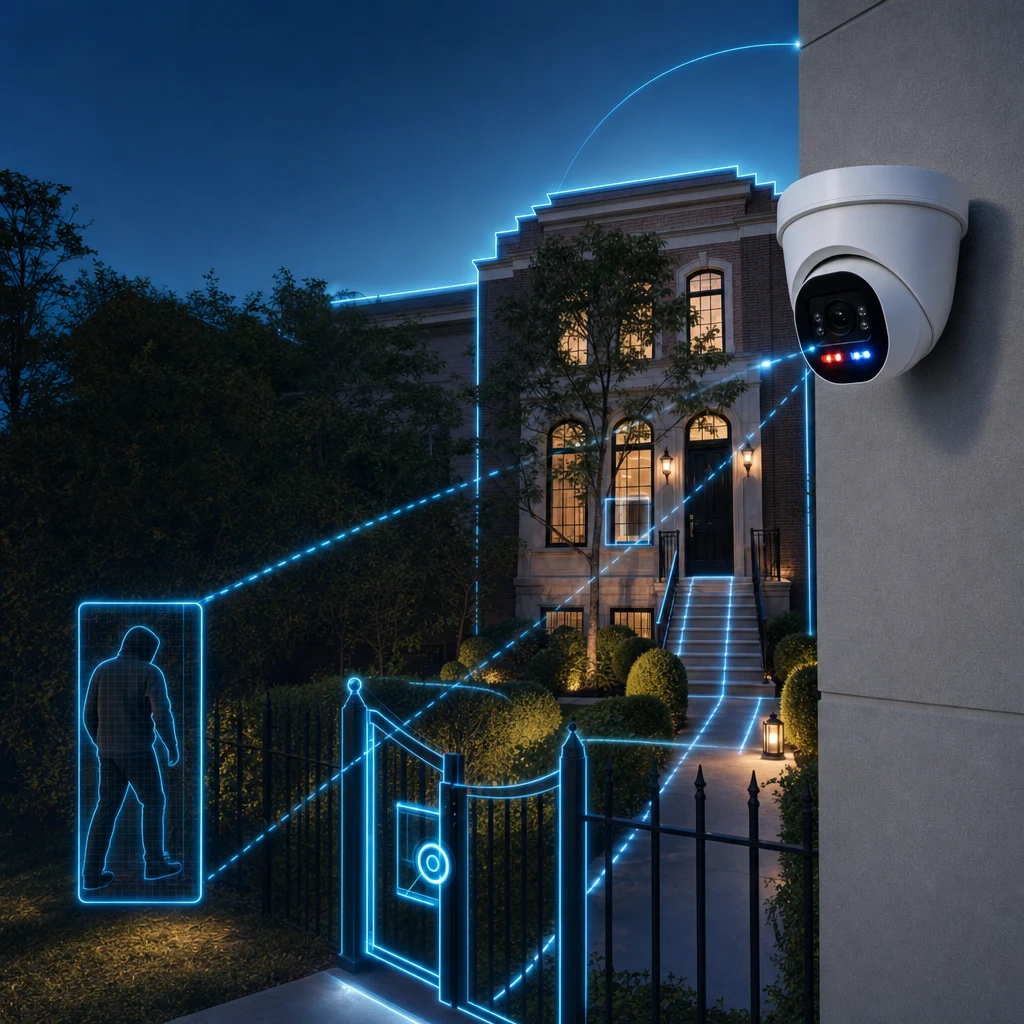
What a camera system gives you
Cameras are good at one thing: documenting what happened. Modern ones also send alerts, and that is genuinely useful. The limit is that a notification arrives and then waits for you. You decide whether it matters, whether to call someone and what to say.
That works if you are home and attentive. It works less well at a meeting, on a flight or at three in the morning.
What a traditional alarm gives you
A conventional alarm watches the house itself: doors, windows and interior space. When one of them is triggered, a central station is notified. It is a proven model, and for a small home with limited access points it may be sufficient.
Its timing is its constraint. The alarm reports a breach after someone has reached the building.
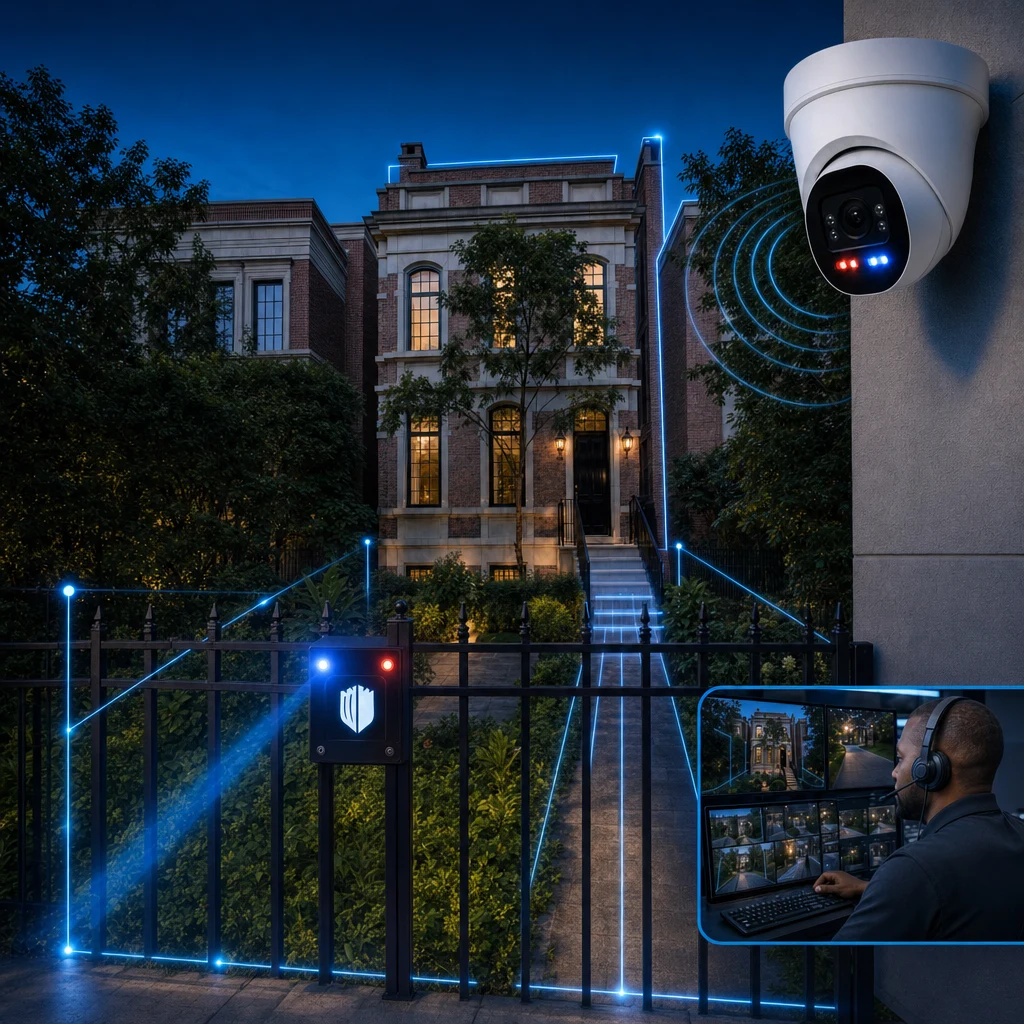
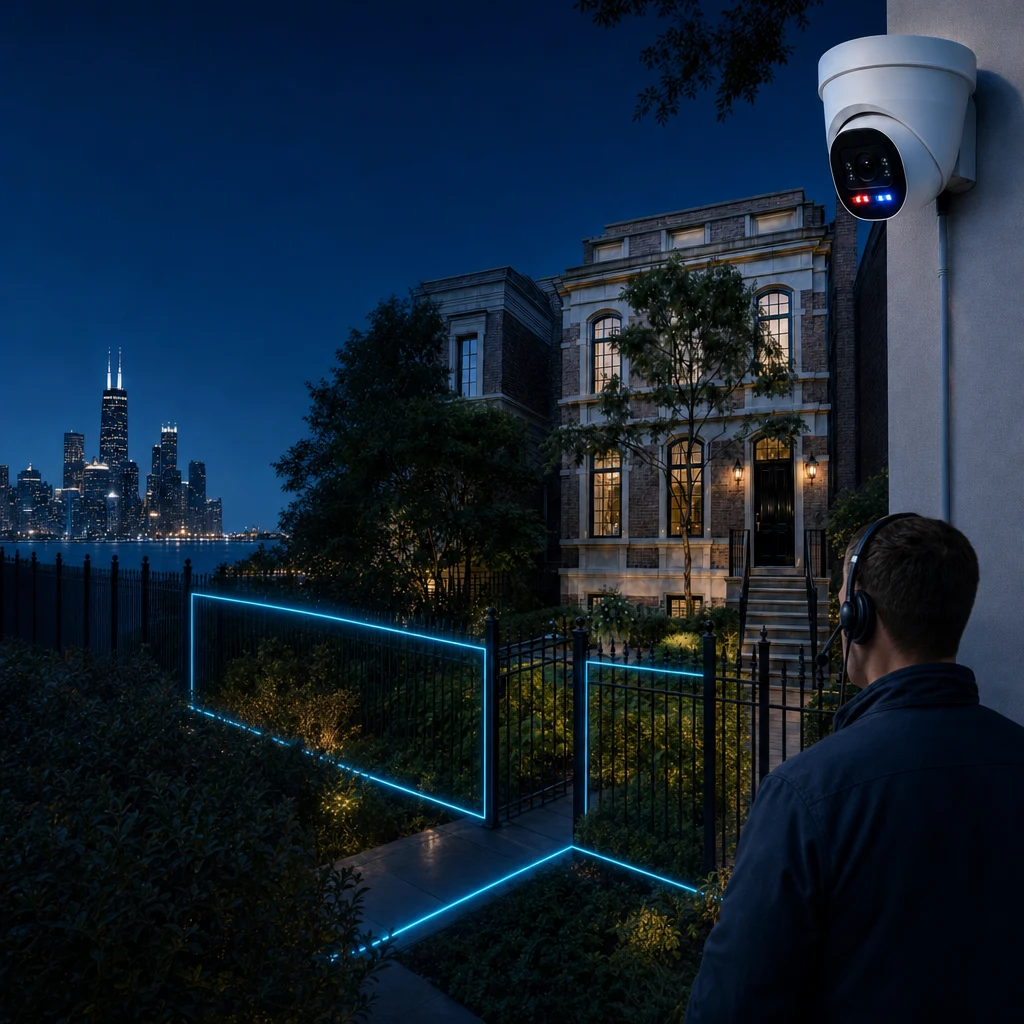
Where Windsor starts
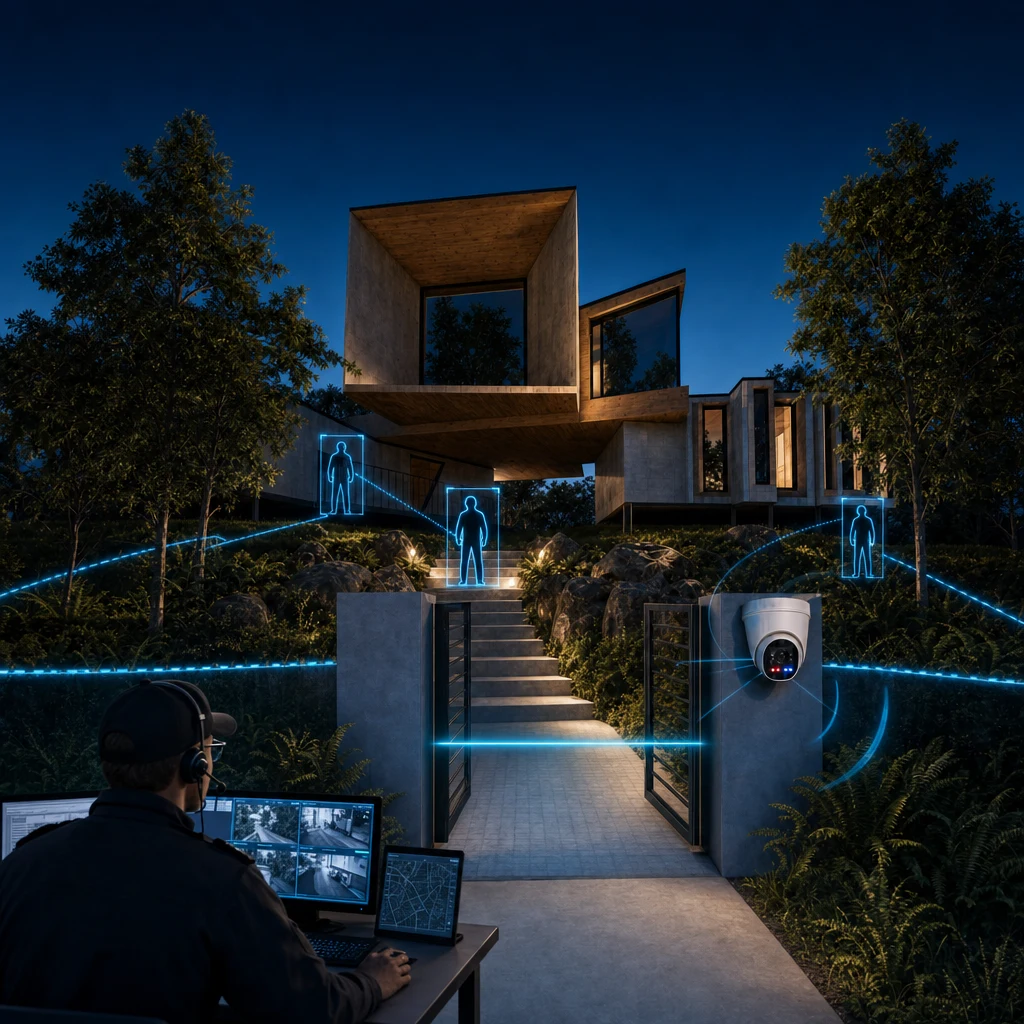
When armed, Windsor puts people-focused detection at configured approaches: the drive, gate, side path or patio. Lights and audio can activate and an event may reach a monitoring specialist for review. The aim is early deterrence and a response without requiring the homeowner to assess every notification.
Want this designed around your property?
A comparison, plainly
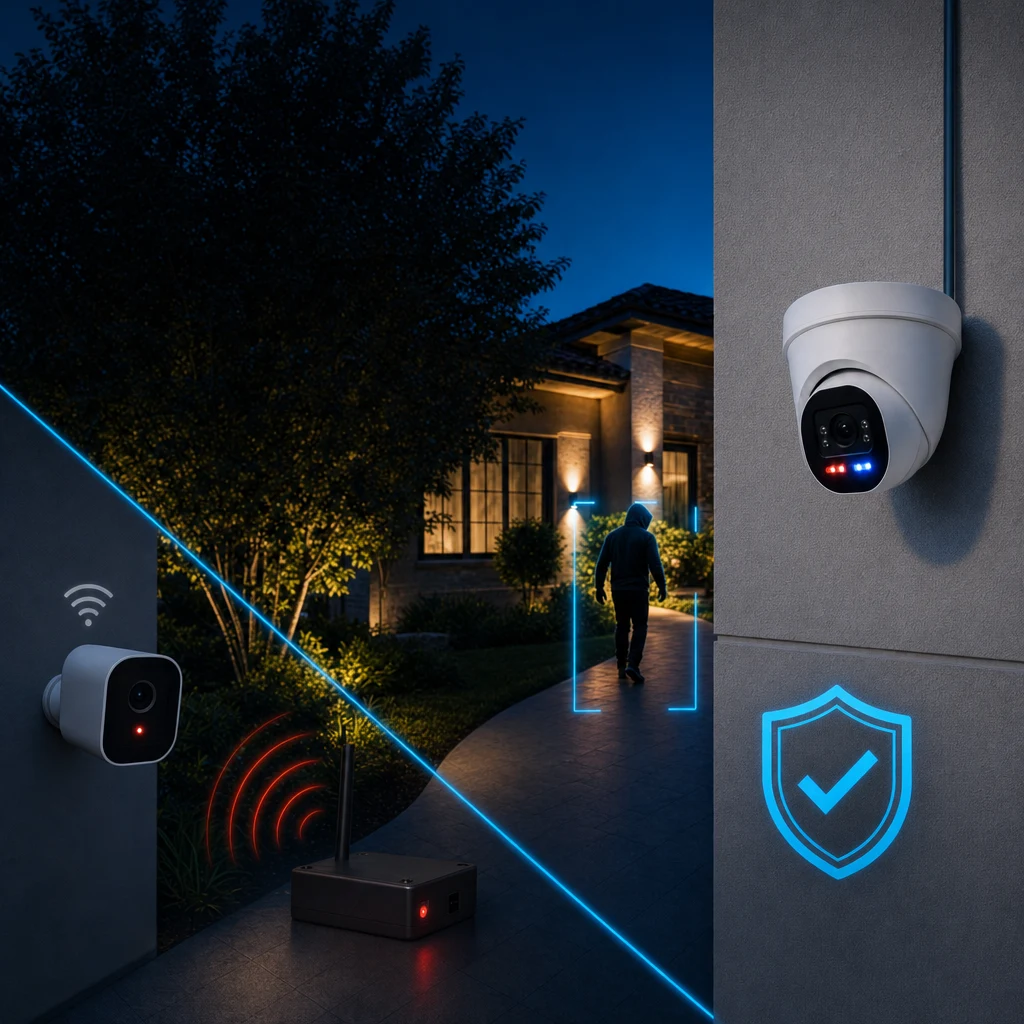
The three approaches differ mainly in when they act and who decides.
- Recording camera: documents activity, and the homeowner decides what to do.
- Traditional alarm: reports entry, and a monitoring centre follows its procedure.
- Windsor: while armed, detects people crossing configured lines, supports on-site deterrence and sends events for professional review under the service process.
Designed around the property, not a catalogue
Windsor does not offer tiers. A design starts with how your property is approached and how your household lives, then specifies the coverage, the infrastructure and the response. That is why two neighbouring homes can receive different systems, and why the work is done by professionals rather than left to a self-install kit.
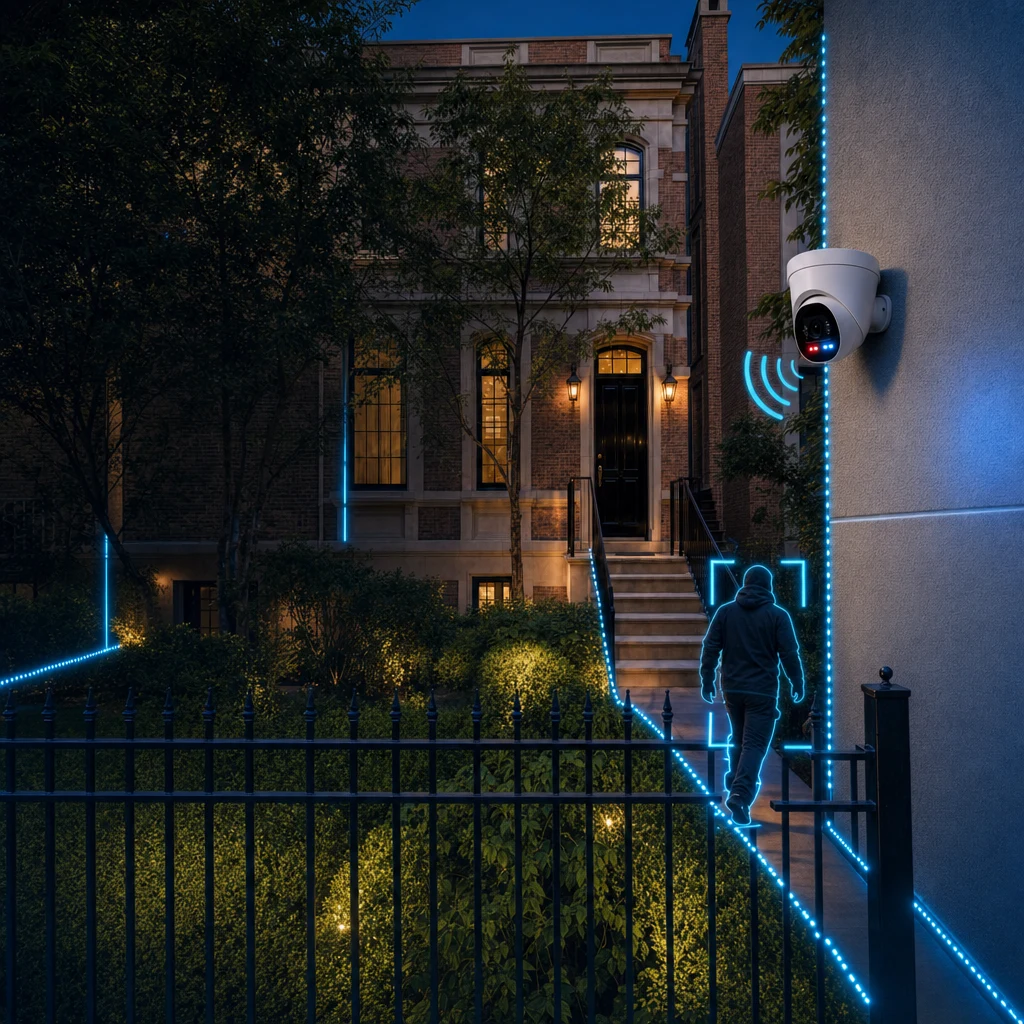
Quiet by design
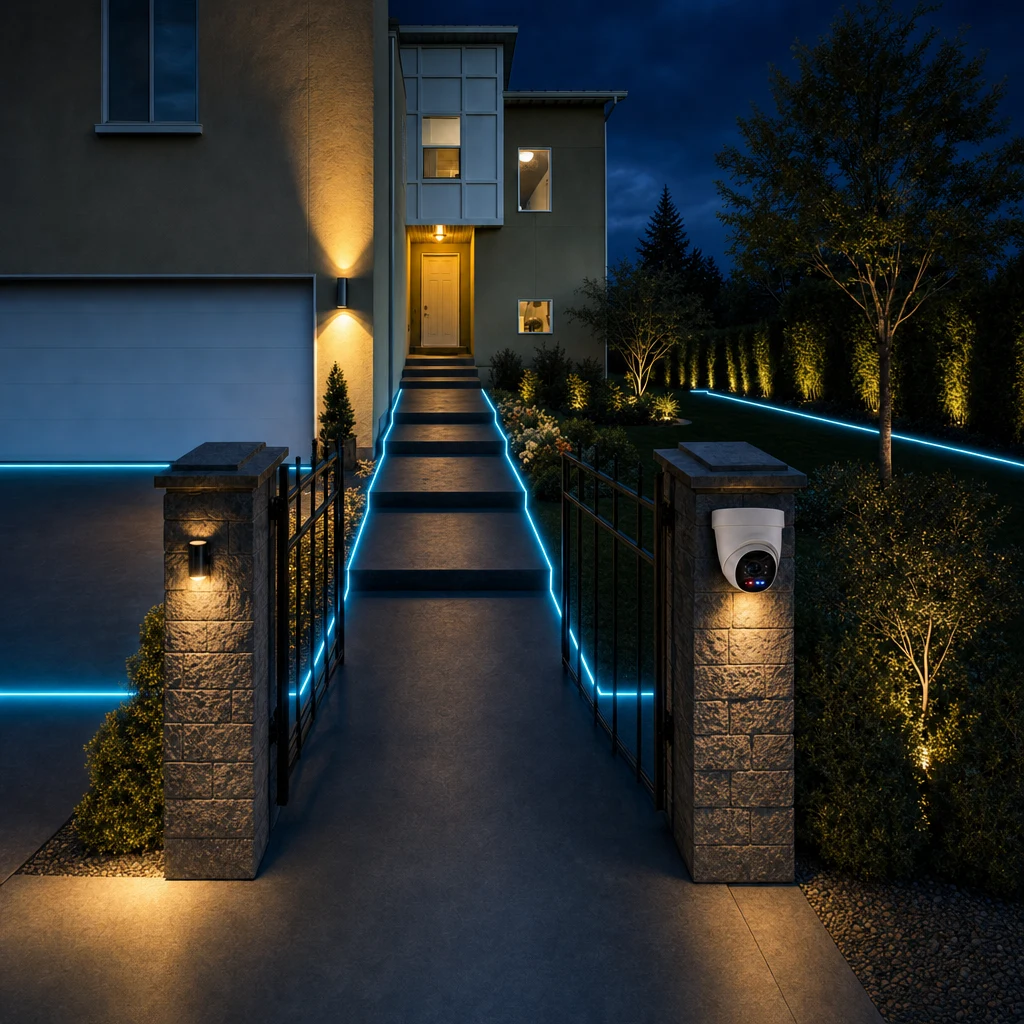
People who own substantial homes often dislike the look of security equipment as much as they dislike the risk. Hardwired infrastructure lets devices be placed with care and wiring stay out of sight. The result is a property that does not look like a facility.
What we think matters when you compare
When you look at security providers, look past the equipment list. Equipment is easy to copy. What differs is who designs the system, who reviews events, how the response plan is written and what happens after installation.
The important distinctions are property-specific detection-line placement, hardwired critical infrastructure, a clear monitoring process and support after installation. Specialists assess visible event footage, not personal knowledge of your household. You can view cameras, but event review does not have to be your responsibility.
- Who designs the system for your property
- Who reviews events and how the escalation process works
- What is hardwired and what is wireless
- What happens after installation
- What the provider will not promise
Service scope
Windsor designs and installs residential security systems in selected markets. Confirm availability for your address and ask for the proposed scope and service terms during the consultation.
Licensing and questions to ask
You can find the supplied license numbers on the licenses and compliance page. Confirm the requirements for your project and ask Windsor about installation, monitoring and ongoing support.
A note on cost
Compare the proposed scope rather than an equipment list alone. A recording camera, a professionally installed detection system and a managed response service have different responsibilities. Ask what is included, what remains your responsibility and which ongoing terms apply. The consultation helps establish whether Windsor’s approach addresses your priorities; any quotation should be evaluated against the documented property-specific scope.
If budget is the main constraint, say so early. We would rather tell you honestly whether Windsor fits than build a proposal you cannot use.
What changes for the household
The practical difference is responsibility for reviewing events. Recording and ordinary motion alerts can be useful, but self-monitoring requires someone to assess them. Windsor connects configured, armed detection to deterrence and professional event review under a consistent service process.
Who should look elsewhere
If you want a low-cost starter kit you can mount yourself, Windsor is not that. If your concern is an interior alarm for an apartment, a conventional alarm may suit you better. We would rather tell you that during the first call than after an installation.
Frequently asked questions
Is Windsor a replacement for cameras?
Windsor uses cameras, but as part of a system that adds AI-assisted detection, deterrence and professional review. The cameras are a means, not the product.
Is a traditional alarm obsolete?
No. It protects the building envelope and many homes rely on one. Windsor adds protection earlier, at the property's approaches.
Does Windsor guarantee that a break-in will not happen?
No. No security provider can. Windsor describes what the system is designed to do and does not promise outcomes.
Why does Windsor not list packages?
Because the right scope depends on the property and the household. A package would either overbuild or leave gaps.
Start with your property.
The consultation is free. It begins with your property, access points, routines and priorities.