
Traditional Alarms vs. Preventive Home Security: When Protection Begins
The difference between reporting an entry and changing what happens before it, set out without hype.
Introduction
Many homeowners assume all security systems follow the same basic pattern: if something goes wrong, an alarm sounds and someone is notified.
That model is common, but it is not the only way to think about residential security.
A traditional alarm system is primarily reactive. It is designed to respond when an entry-related event occurs, such as a door opening, a window breach, or interior motion after someone has already moved deeper into the property.
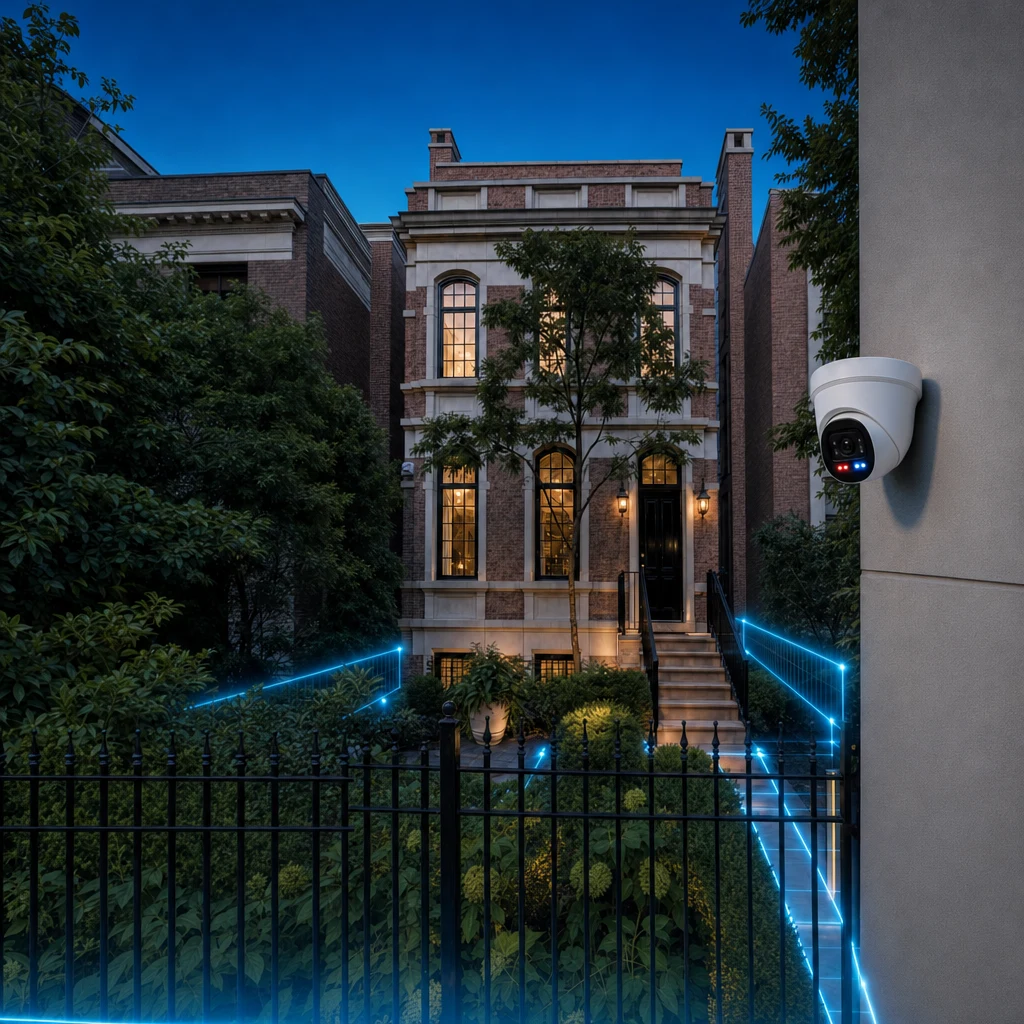
Preventive security starts earlier. A perimeter security system is designed to identify relevant human activity at the approaches to the property, support deterrence, and connect the event to trained professionals before entry occurs.
That timing difference changes the entire strategy.
What a traditional alarm is designed to do
Traditional alarm systems usually focus on signs of intrusion at or inside the home.
Common triggers include:
These systems can be valuable. They create an important layer of awareness and may initiate notification or monitoring when an entry-related threshold is crossed.
But they generally begin responding later in the event sequence.
In simple terms, the alarm often waits for entry.
- Door contacts
- Window contacts
- Glass-break sensors
- Interior motion detectors
- Panic buttons
What preventive security is designed to do
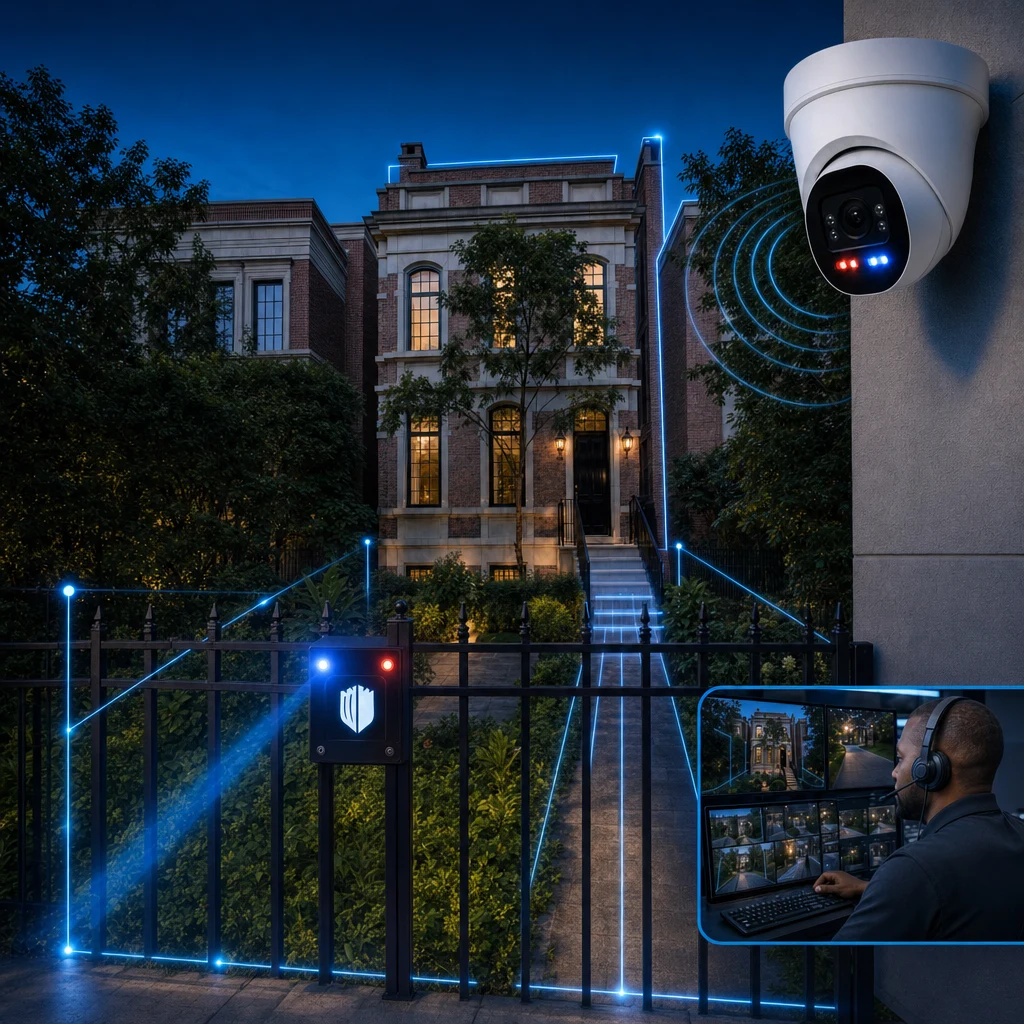
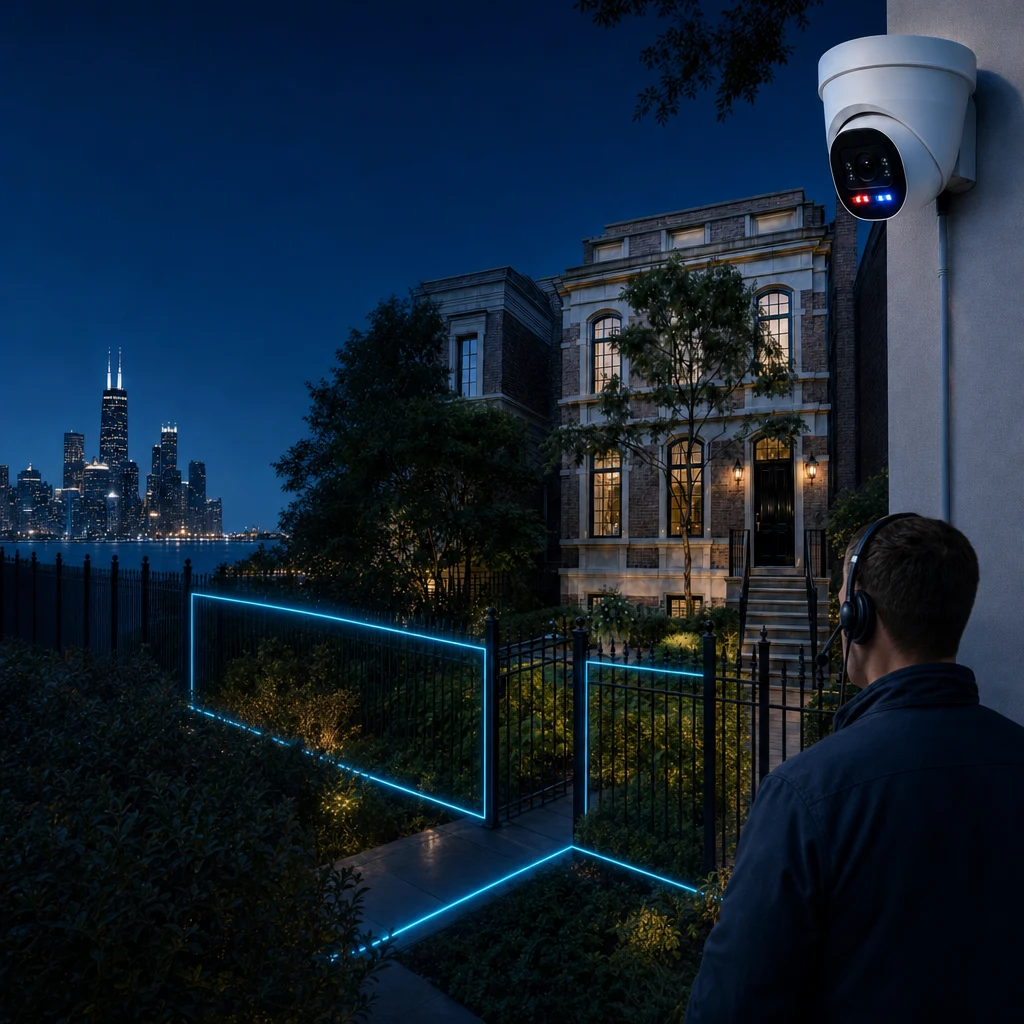
Preventive security shifts attention outward, toward the routes a person must take to approach the home.
A preventive setup may include:
Rather than centering the first response on a breached opening, it centers the first response on relevant human activity at the perimeter.
That is why Windsor often describes the concept as: an invisible line, an automated response.
- Exterior cameras placed around meaningful access routes
- AI-assisted person detection
- Configured boundaries at gates, walks, drives, side passages, or rear approaches
- Lights or audio deterrence
- Trained live monitoring and event verification
Want this designed around your property?
The key difference is when the system begins responding
This is the clearest way to compare the two models.
Traditional alarm.
Responds when the event has already reached a protected opening or interior space.
Preventive security.
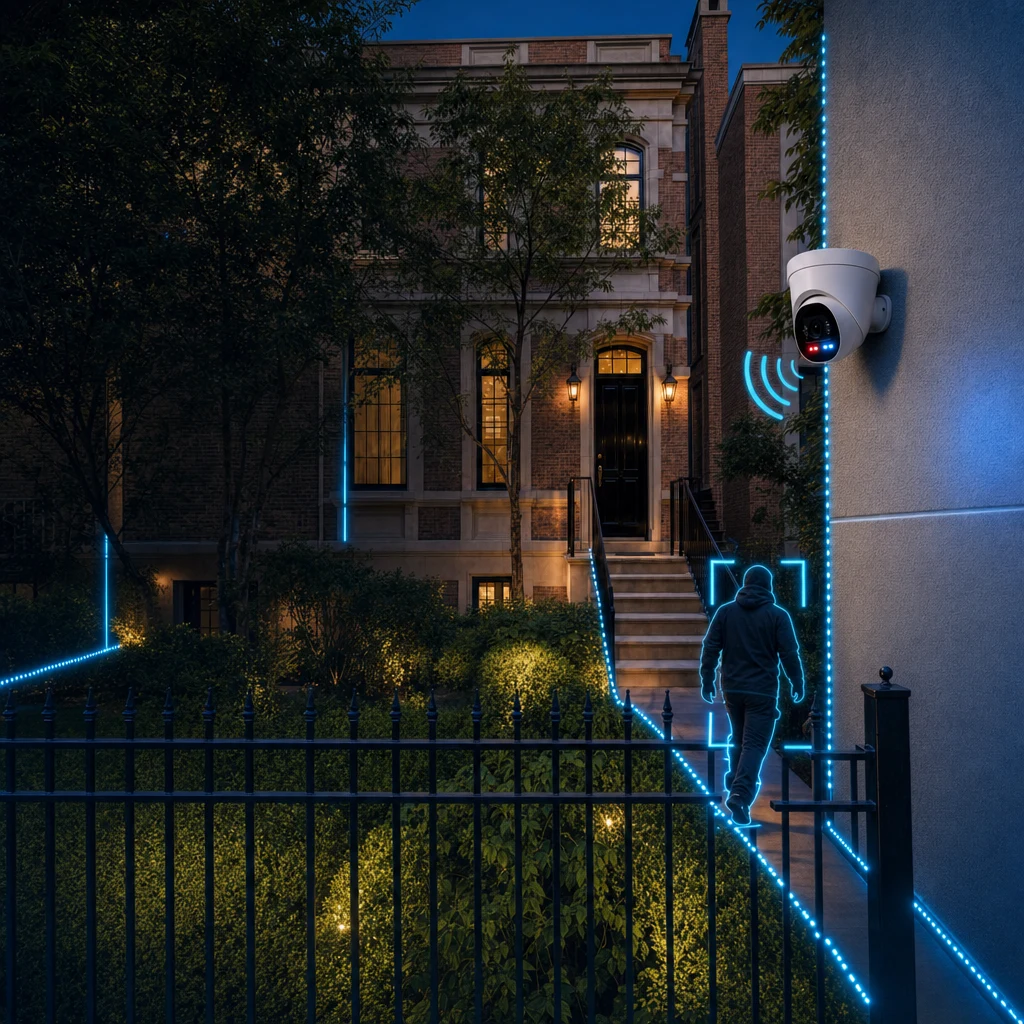
When armed, a person crossing a configured detection line may generate an event and activate configured deterrence. The line need not follow the property boundary.
That earlier start can create more options. It can allow the system to support deterrence, professional review, and escalation before a person reaches the structure.
Recording, reporting, or changing the event
Another useful way to compare these models is to ask what each one is best at.
Recording camera systems.
Best at documenting what happened.
Traditional alarms.
Best at reporting that an entry-related trigger occurred.
Preventive security.
Designed to change what happens next by detecting sooner, deterring earlier, and involving trained professionals before entry.
This does not mean older approaches have no value. It means their role is different.
Why preventive security uses AI and monitoring together
A modern perimeter intrusion detection system is not just a camera pointed outside. The system needs a way to distinguish relevant activity from ordinary motion and a process for deciding how to respond.
That is where AI and trained professionals work together.
AI helps filter.
The analytics layer is designed to help identify a person rather than pets, vehicles, or weather.
Monitoring professionals verify.
Specialists assess footage sent to them and follow a cautious, largely standard service process. They do not recognize visitors or know who belongs at the home. An event does not automatically require emergency contacts or police dispatch.
That combination can make perimeter security more practical and more usable than simple exterior motion alerts.
For more detail, see AI Perimeter Security Explained and Live Monitoring vs. Self-Monitoring.
Why timing matters so much
A homeowner does not need a lengthy technical explanation to understand why earlier detection matters.
If awareness begins when someone is already forcing a door or moving inside the home, the system has fewer response options.
If awareness begins when someone crosses a protected exterior route, the system may have time to:
Earlier does not mean guaranteed. It means more opportunity to interrupt the sequence before it progresses further.
- Turn on lights
- Trigger audio deterrence
- Bring trained professionals into the event
- Notify the homeowner
- Consider appropriate action under the service process, without automatic dispatch
What this means for your home
For many households, the question is not whether a traditional alarm has any value. It is whether that value is enough.
A traditional alarm may still fit homeowners who mainly want a standard intrusion signal at doors and windows.
Preventive security may be the better fit when:
This is especially relevant for homes with side access, rear entries, detached structures, gates, longer driveways, or multiple approach paths.
- The property has meaningful outdoor approaches
- The homeowner wants the response to start sooner
- Self-monitoring is not realistic
- A managed, property-specific system is preferred
- The goal is deterrence, not only documentation after the fact
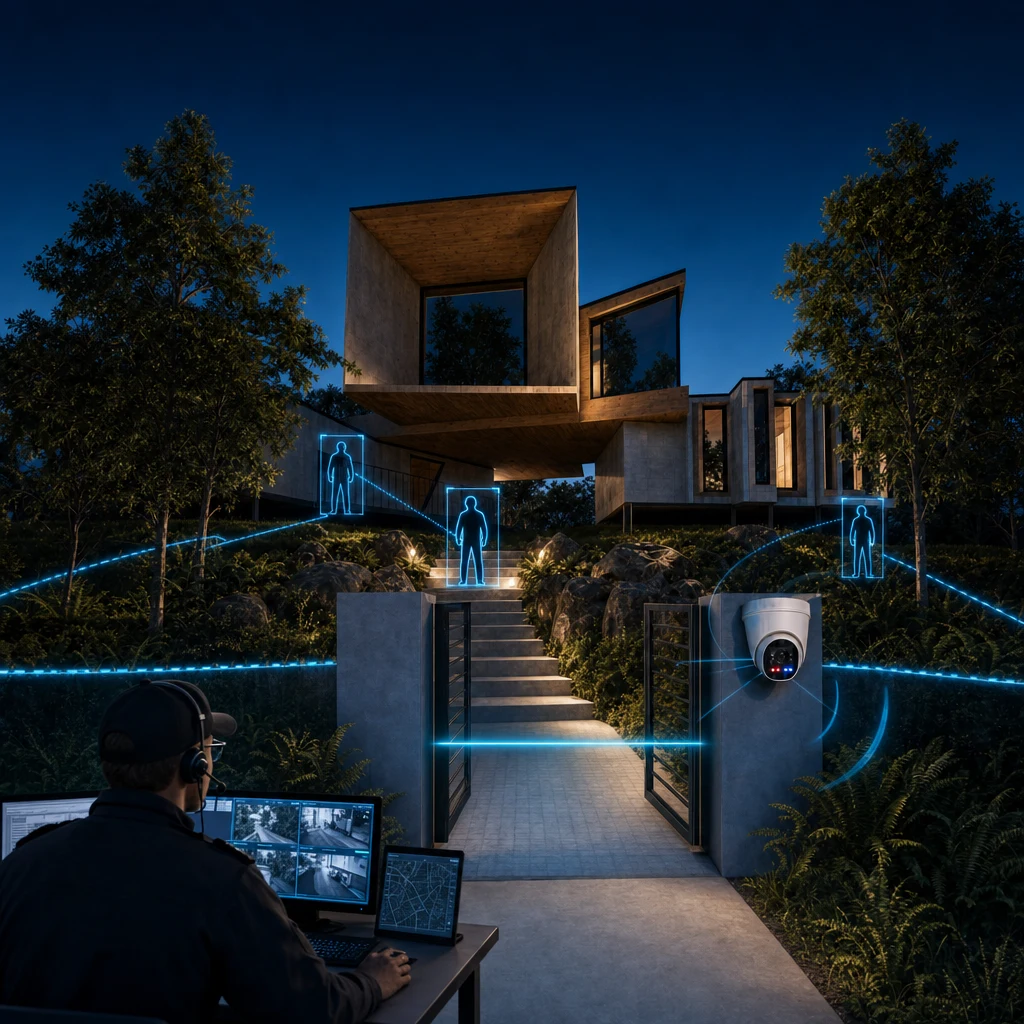
How detection and response work together
Homeowners sometimes assume preventive security simply means adding more devices. In reality, it is a design philosophy.
A true residential perimeter security system depends on:
This is why Windsor describes its work as bespoke and property-specific rather than kit-based.
- Mapping the property
- Identifying the routes that matter
- Configuring meaningful detection zones
- Choosing deterrence actions carefully
- Integrating monitoring into the response process
- Aligning the system with the household’s preferences
Where hardwired infrastructure fits in
If the system is meant to begin responding at the perimeter, infrastructure matters. Windsor emphasizes hardwired installation for critical security components because preventive security depends on dependable detection and communication.
Wireless security can be convenient, but a wireless signal can also become a point of failure. In a system designed to detect and act early, reducing those weak links matters.
For the infrastructure comparison, see Hardwired vs. Wireless Home Security.
Traditional alarms still have a place
A balanced comparison should acknowledge this clearly: traditional alarms can still be useful.
They may remain part of a layered residential security plan. But on their own, they usually do not deliver the same early-detection and deterrence strategy as a preventive perimeter approach.
The issue is not whether one category is “good” and the other “bad.” The issue is what each system is built to do.
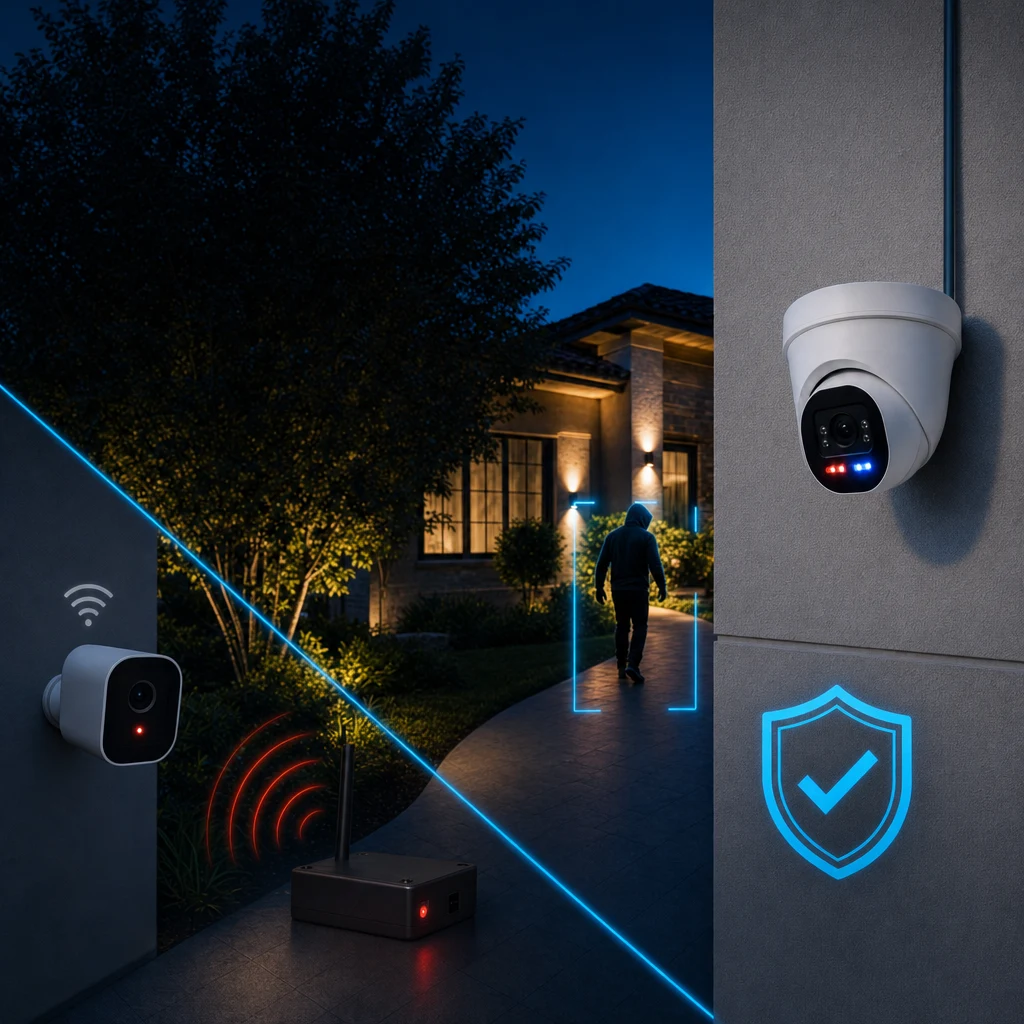
The Windsor perspective
Windsor Defense’s model is designed around prevention. The company’s systems are professionally hardwired, AI-driven, and monitored by trained professionals so relevant activity can be detected, deterred, and escalated before entry occurs.
That is fundamentally different from a model that begins only after a breach threshold has been crossed.
If you want to understand the full sequence, visit How Windsor Defense Works or explore Residential Security Systems.
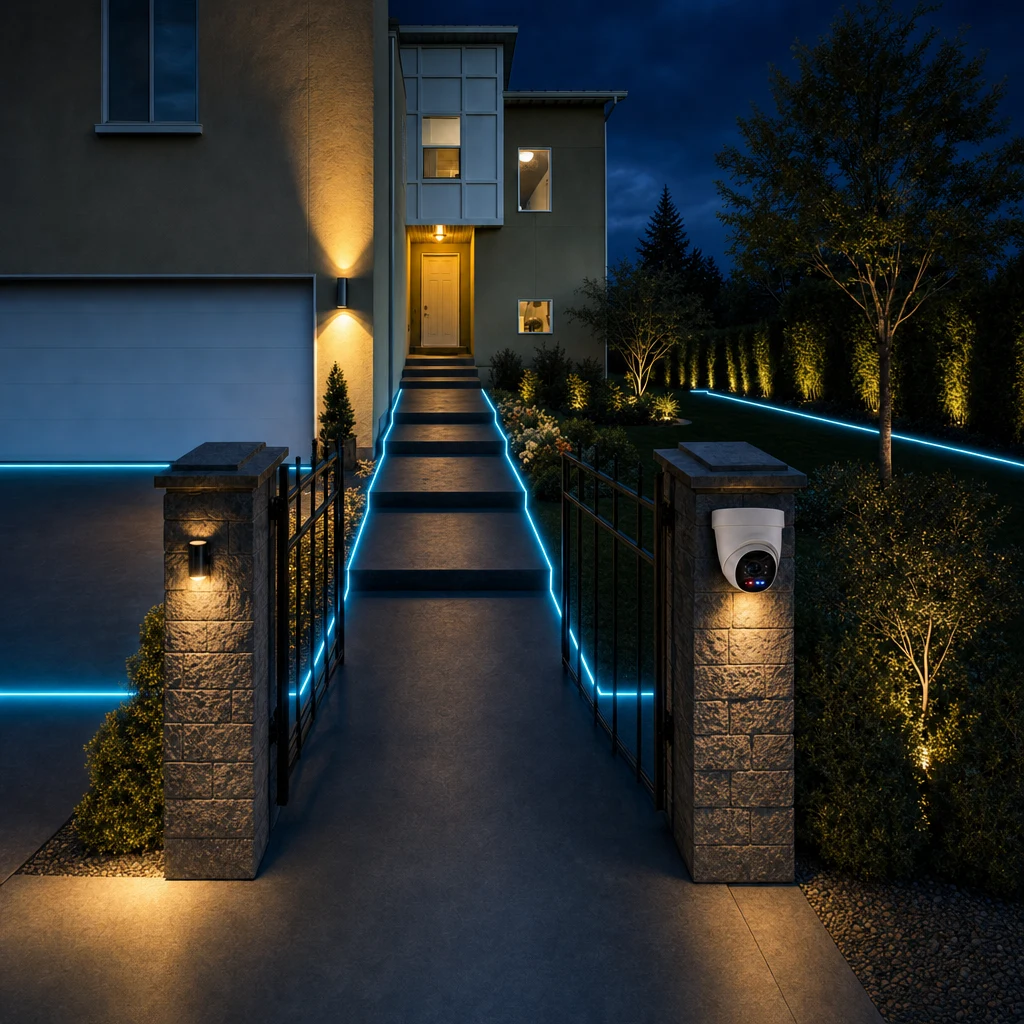
Start with your property.
The consultation is free. It begins with your property, access points, routines and priorities.