
Residential security that starts at the perimeter.
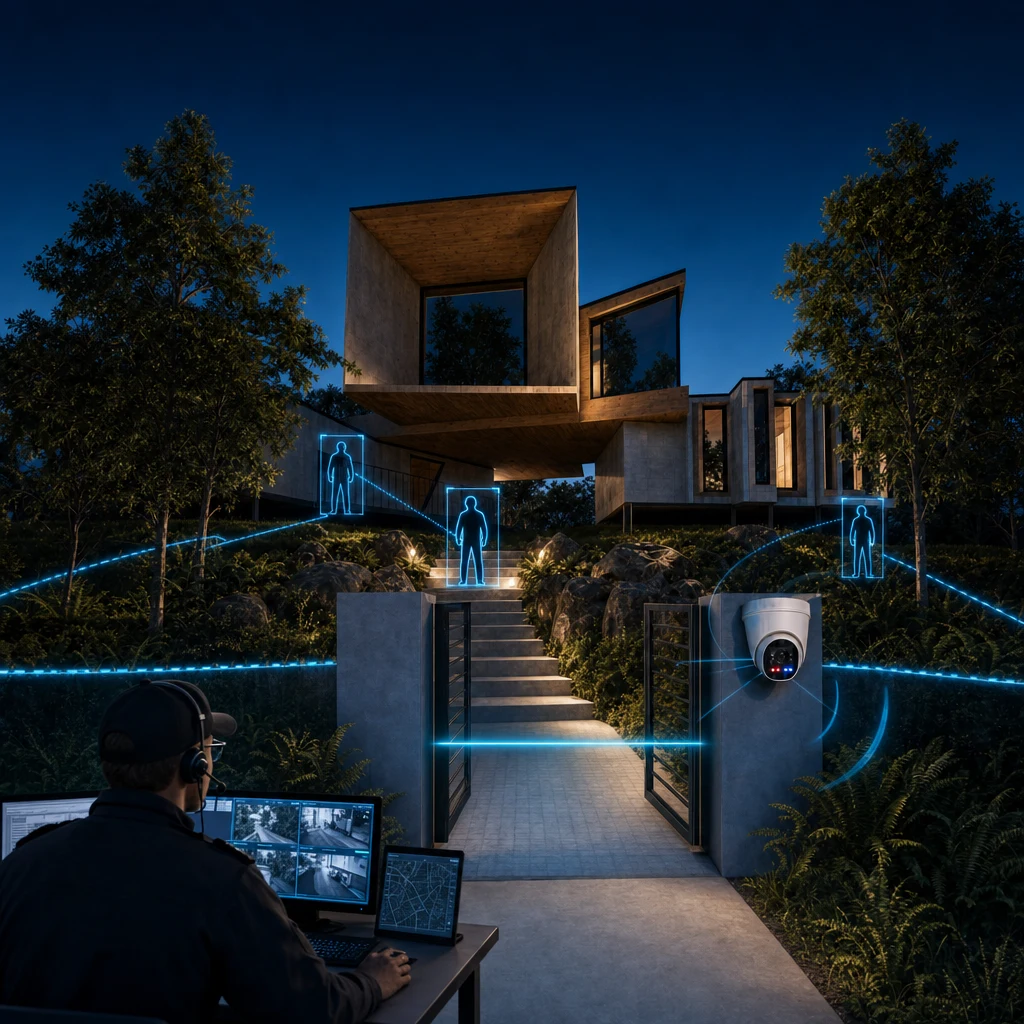
Windsor Defense combines property-specific detection lines, active deterrence and professional monitoring. You control the system through the app. When it is armed, a person crossing a configured line may start the prevention sequence, before they reach the front door.
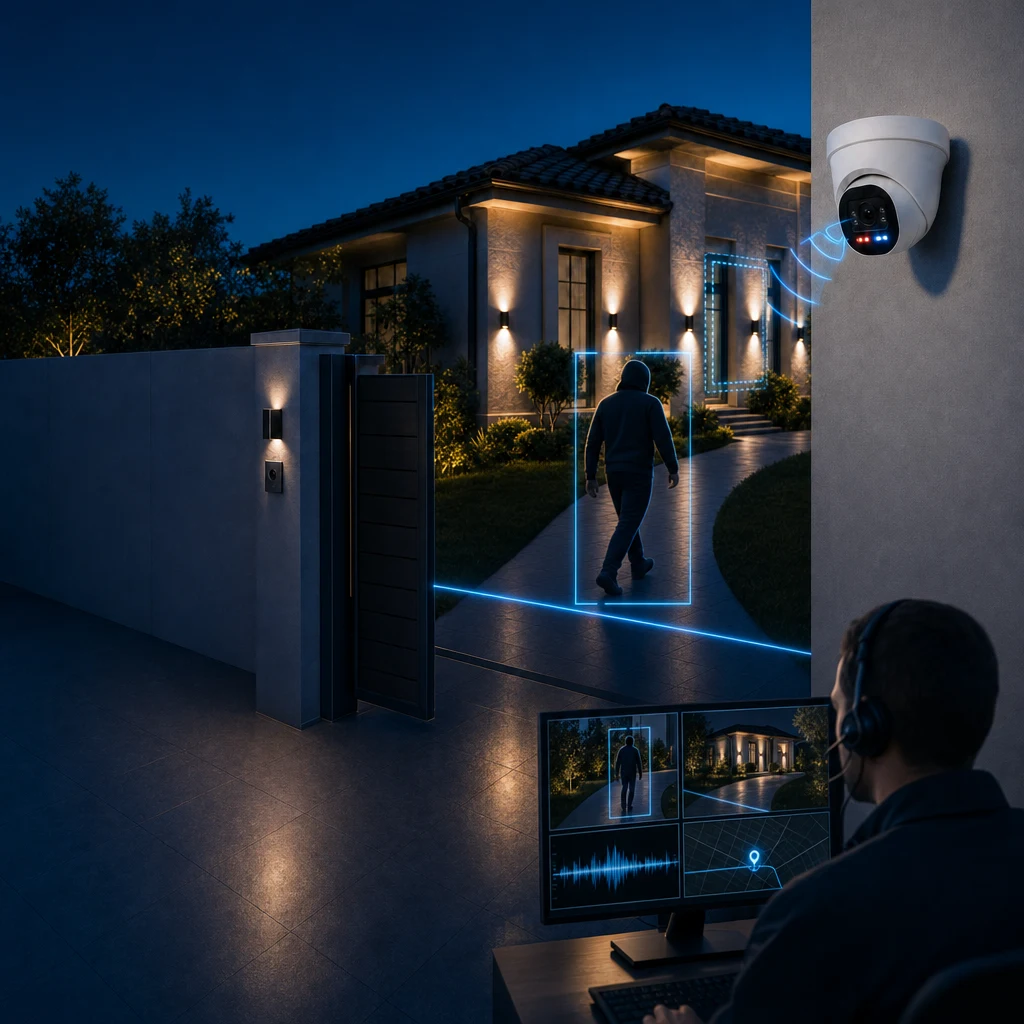
The problem with protecting only the house
Most residential systems are built around the building envelope. Door contacts, window sensors and interior motion detectors tell you that something has already happened. Cameras add a recording, and sometimes a phone notification, but they leave the decision to whoever happens to look at the screen.
For a large or complicated property, that sequence leaves a lot of ground uncovered. A driveway, a side gate, a rear patio and a detached garage are all places a person can be before any sensor on the house is touched. Windsor treats those approaches as the first line of the system rather than as background.
What Windsor builds instead
A Windsor system is a property-specific design with four working parts. Each part has its own page, so this one stays brief.
- AI-assisted detection at the approaches and access points chosen for your property.
- Active deterrence, including lights and sound that can be configured at the perimeter.
- Trained professionals who review activity and can speak to a person on site.
- A consistent response process with your relevant contact and notification details on file.
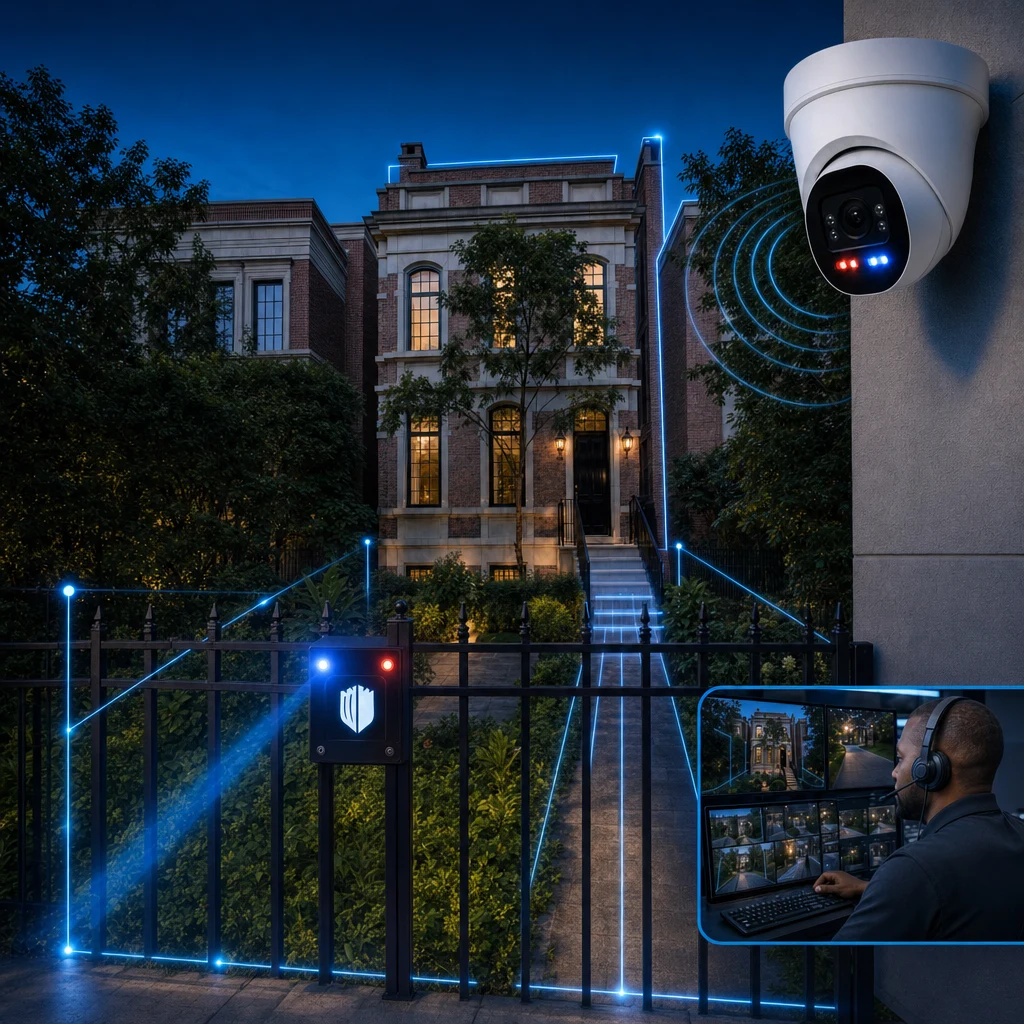
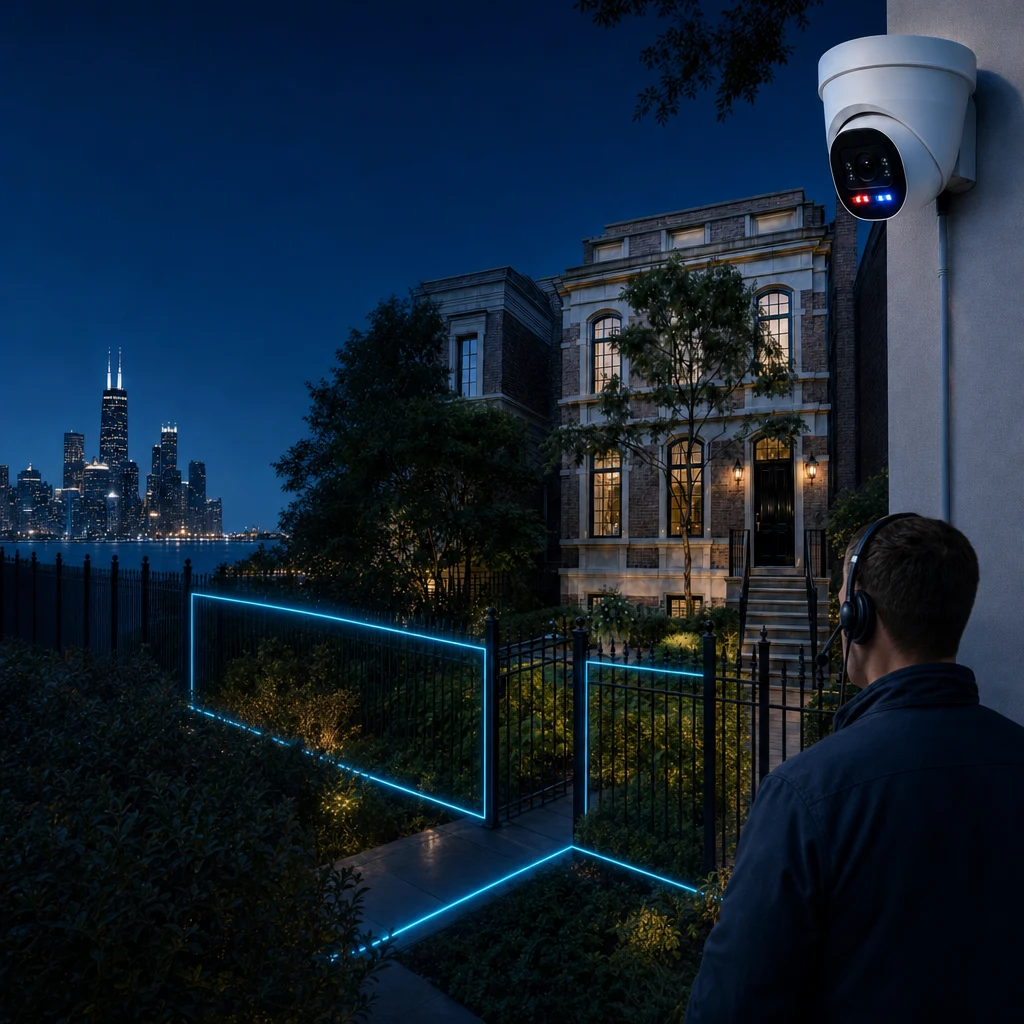
Why the infrastructure is hardwired
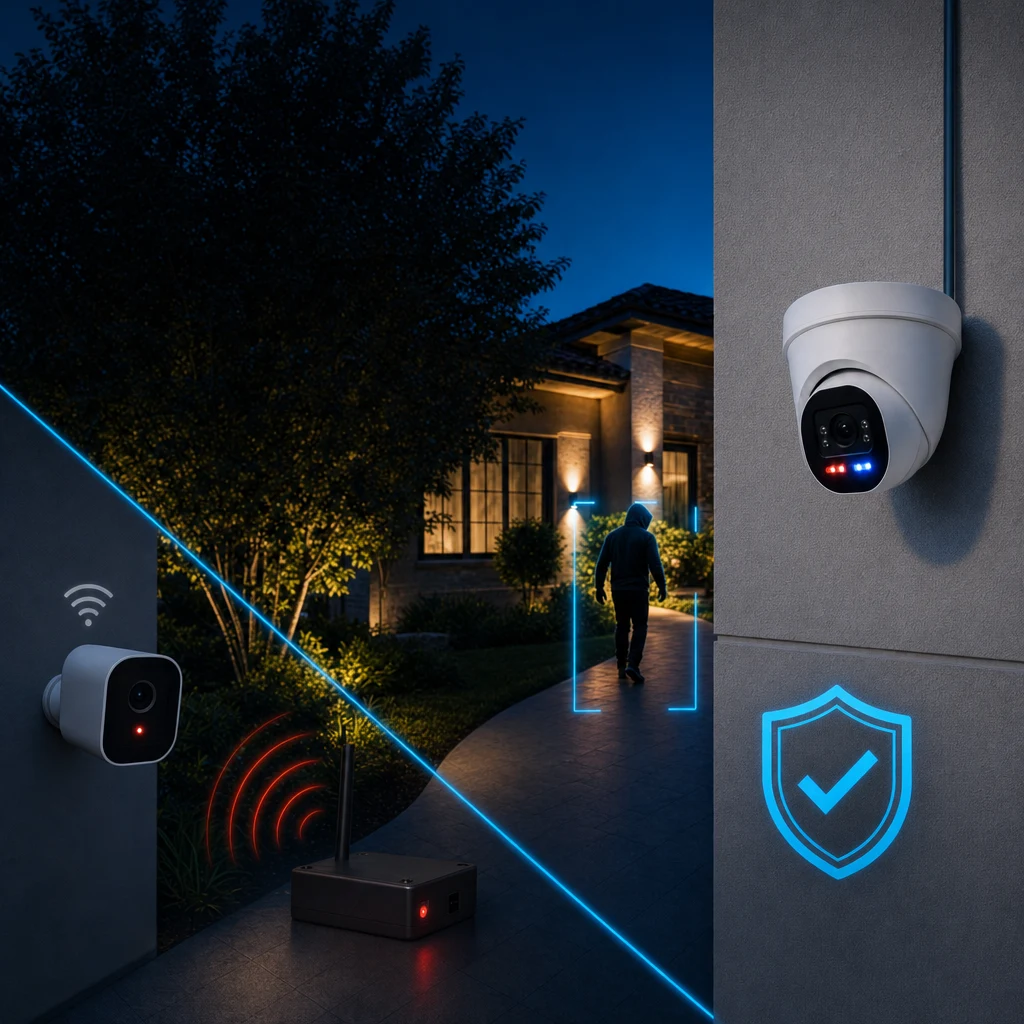
Critical components are professionally hardwired during installation. A wireless link is convenient, but it is also something that can be interrupted or degrade over time. Windsor designs the cabling and power as part of the property, which also lets equipment sit discreetly rather than announcing itself on every elevation.
Hardwiring does not mean every device is wired. The design decides which connections are critical and treats them accordingly.
Want this designed around your property?
Property-specific system design
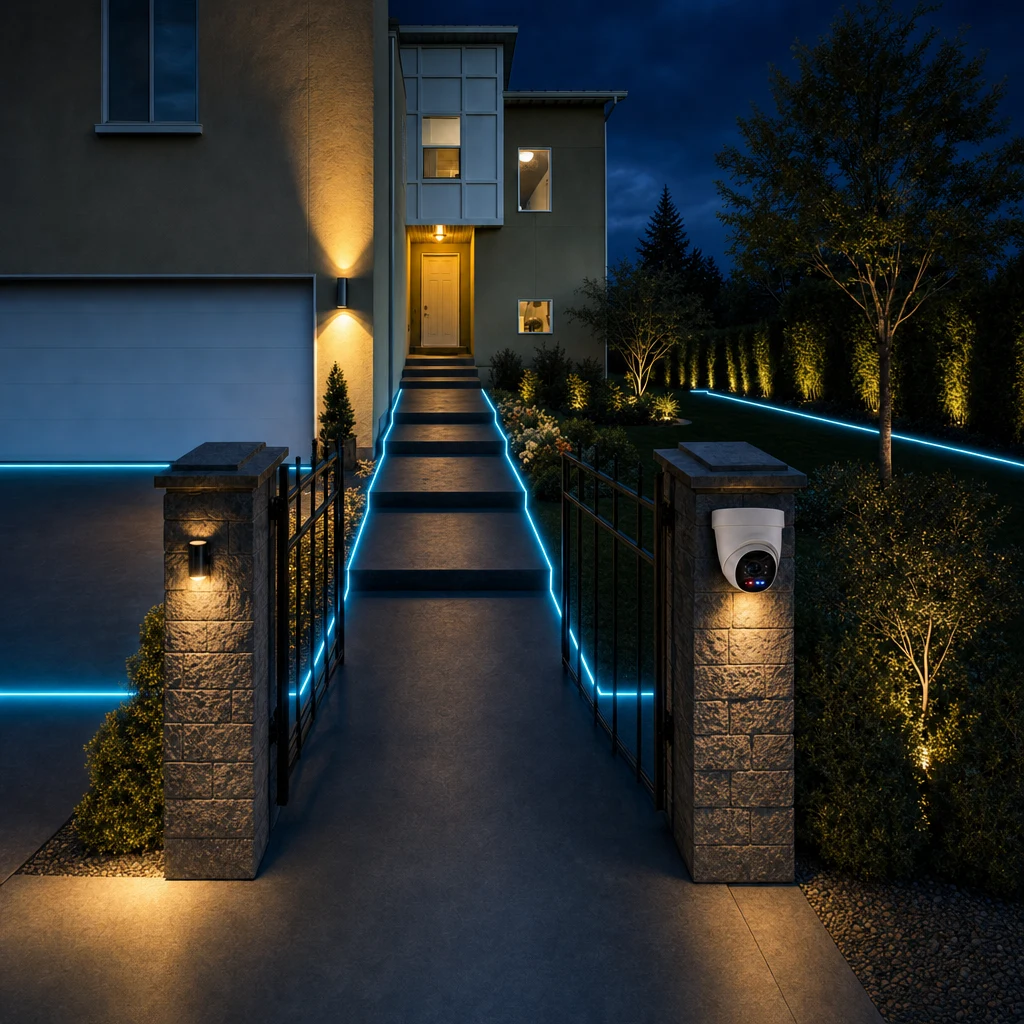
The lot, access points and household routine shape the scope, equipment and detection-line placement. A line may sit near a gate, sidewalk, front yard, side passage, porch or door; it does not have to follow the property boundary. Two homes of the same size can need different coverage.
Who this suits
Windsor is built for primary and second homes where the property is more complex than a single front door: estates, gated properties, urban residences with alleys and side passages, and homes that are empty for stretches of the year.
This includes people protecting family and assets such as art, collectibles, vehicles and jewelry, including items that may be expensive to insure. The value is a designed, managed service without making the owner responsible for watching every alert.
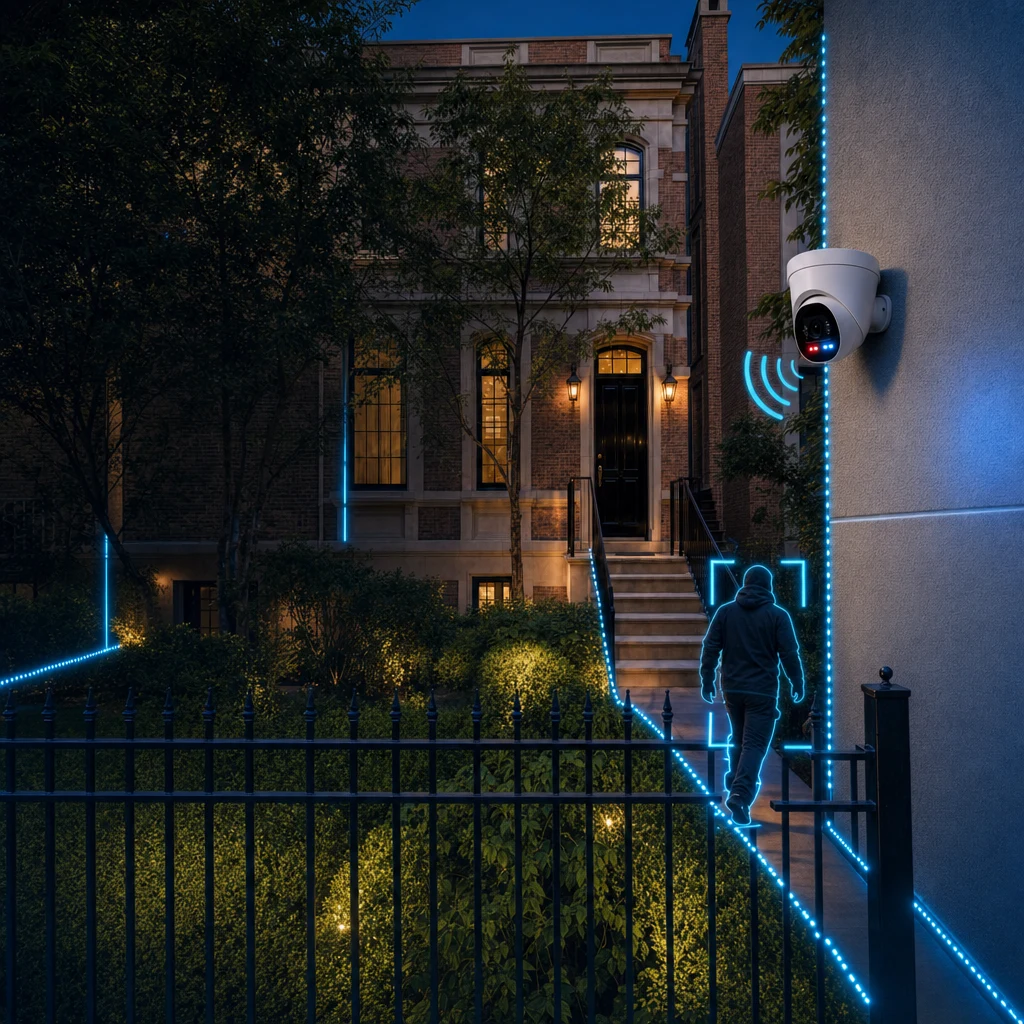
A closer look at the property approaches
Think about how a person could actually reach your home. The obvious route is the front walk. Less obvious ones are a side gate that is rarely locked, a service drive behind a hedge, a rear terrace that faces a wooded boundary or a garage door facing an alley. Each of those is a path with a beginning that is a long way from the front door.
Windsor documents those routes on the property walk-through and chooses which should be configured as protected approaches. Not every path needs coverage, and over-instrumenting a property is its own kind of failure because it produces noise that people learn to ignore.
- Primary entrances and gates
- Drives, turn-arounds and parking areas
- Side passages and rear approaches
- Pool areas, patios and courtyards
- Garages, guest houses and outbuildings
What ownership looks like day to day
You control arming and disarming through the app and can view your cameras yourself. While armed, a person crossing a configured line may generate an event. Specialists review footage sent to them and follow the service process; an event does not automatically require a call to you, an emergency contact or police.
Managed service continues after installation. Windsor can assist with system health, camera lines of sight, detection lines and false alarms. Coverage and relevant contact details can be reviewed as the property changes.
Questions to ask any provider, including us
Ask what the system covers, which components are hardwired, who reviews events and when you would be contacted. Confirm how changes are handled and what service terms apply. The consultation checklist has more questions to bring.
Where to go next
If you want the sequence of events from detection to response, read how it works. If you want to compare Windsor with cameras or a conventional alarm, the comparison page covers it. When you are ready to talk about your own property, the consultation is free and begins with your access points, routines and priorities.
Frequently asked questions
What counts as an event?
A person crossing a configured detection line while the system is armed may create an event for review. An event is not a finding that a crime has occurred, and it does not automatically lead to a police dispatch or an emergency-contact call.
How do I control the system?
You arm and disarm the system through the app. The prevention sequence runs when the system is armed. Windsor designs the detection lines around the property and your needs.
Can I view my cameras myself?
Yes. Homeowners can view their cameras. Professional monitoring means that reviewing and responding to events does not have to fall on you.
Can a specialist speak to someone through the system?
When appropriate, a monitoring specialist may use on-site audio to describe visible details, state that the person is on private property and direct them to leave. They should say police have been dispatched only if that has actually happened.
What happens if a delivery person crosses a line?
While the system is armed, crossing a configured line may generate an event. If the footage shows someone deliver a package and leave, that does not automatically mean police or emergency contacts will be called. Specialists assess what is visible; they do not recognize the person or know whether the homeowner expected them.
Do monitoring specialists know who belongs at my home?
No. Specialists see camera footage when an event is sent for review. They do not know your household or recognize familiar visitors. They use what is visible and a cautious, largely standard escalation process, with relevant contact and notification details on file.
Is Windsor a camera package?
No. Cameras are one component of a larger design that includes detection, deterrence and professional review. System design and detection lines are specific to the property; monitoring follows a consistent escalation process.
Can Windsor work with equipment I already own?
Sometimes. During the consultation Windsor looks at what is installed and whether it fits the design. Critical infrastructure is professionally hardwired, so existing wireless devices may be treated differently.
Do you publish prices?
No. Scope depends on the property and the response plan, so pricing is discussed after the consultation rather than listed as tiers.
Which markets does Windsor serve?
Windsor serves selected markets in Chicago, St. Louis and South Florida. The service areas page lists each one and what is distinct about the properties there.
Start with your property.
The consultation is free. It begins with your property, access points, routines and priorities.