
Critical security should not depend on a wireless signal.
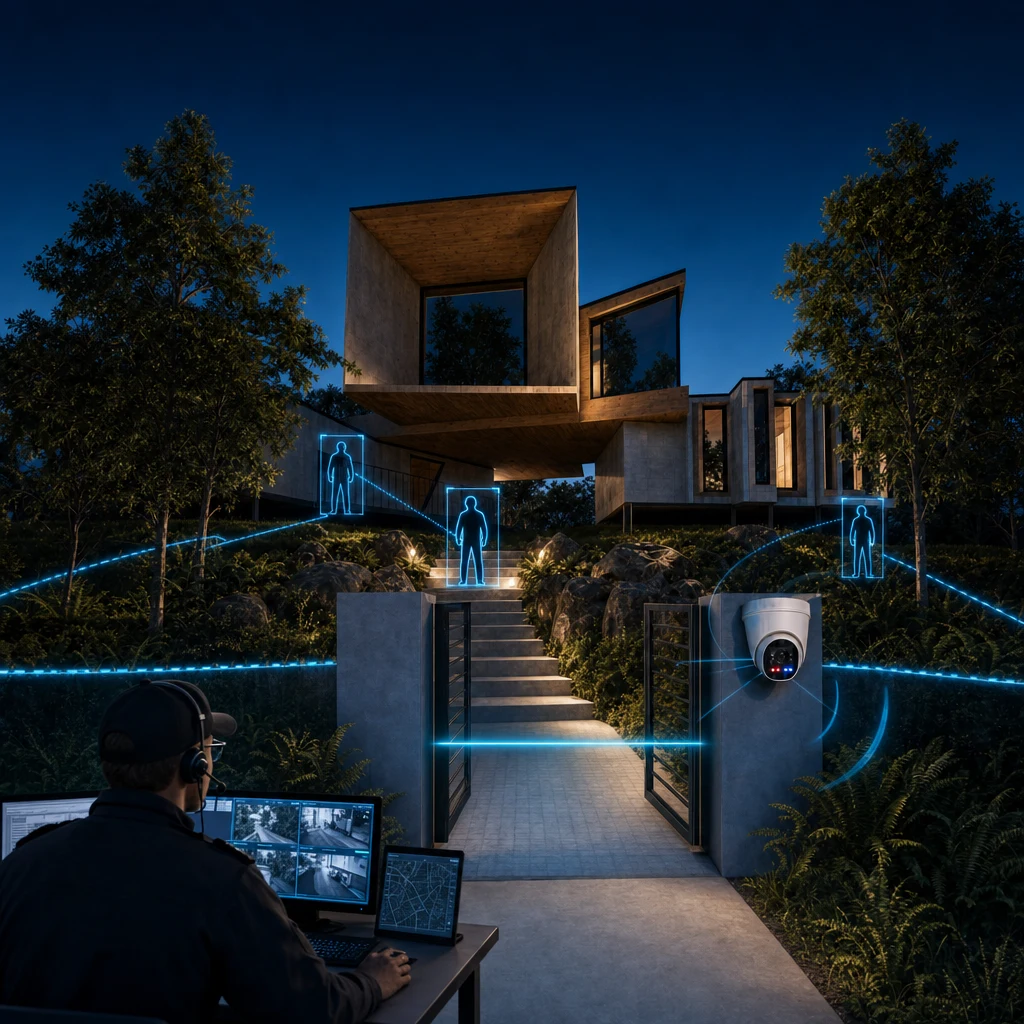
Windsor Defense designs and manages hardwired residential security systems that detect and deter people at the property perimeter. This page explains why the infrastructure is hardwired and what that involves in a finished home.
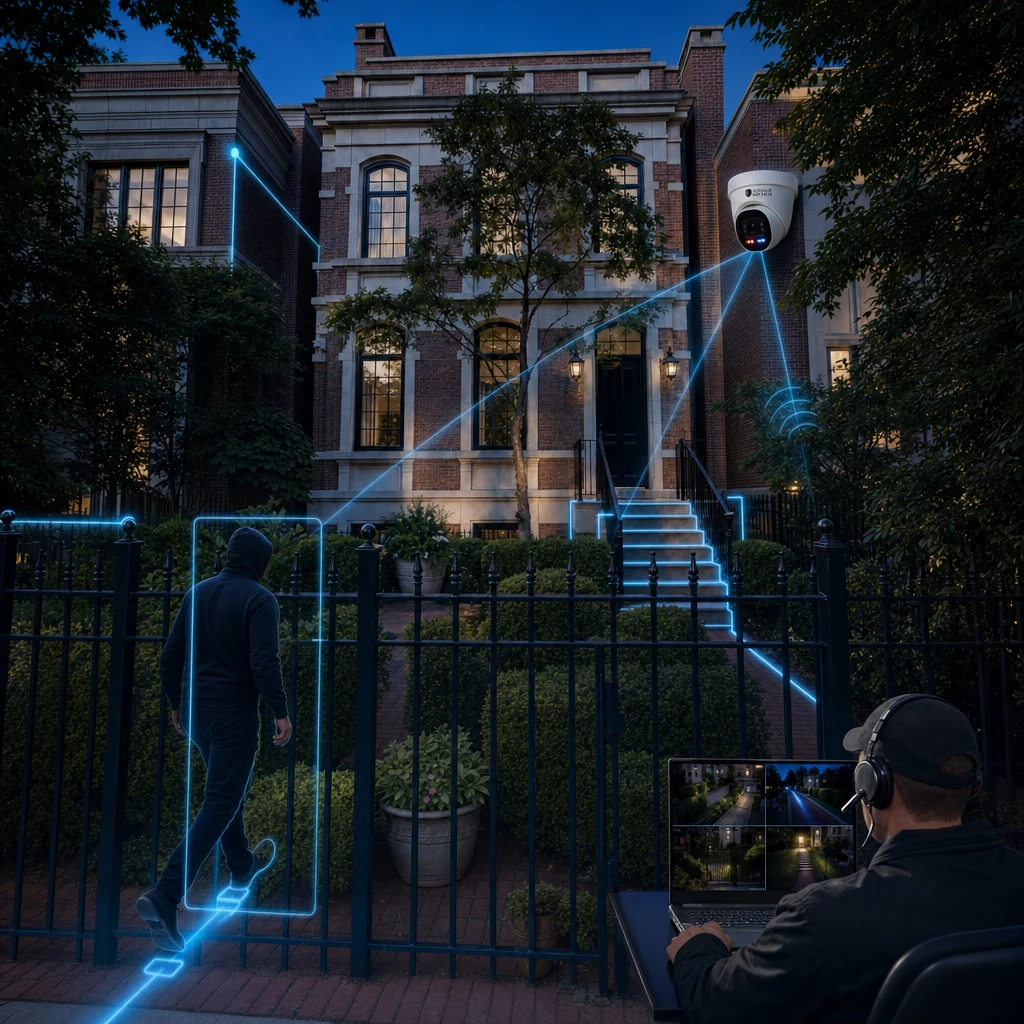
The weak link
Wireless products are easy to install and easy to buy, and for many uses they are fine. The trouble is that a wireless connection is a dependency. Signals can be interfered with, weakened by walls and distance, or dropped when a router changes. Batteries run down. A system designed to protect a property should not rely on those things for its most important functions.
What hardwired means here
Windsor professionally hardwires critical security infrastructure: the connections that carry power and data for the components the system depends on. It does not claim that every device is wired, and the design identifies which connections are critical for your property.
- Power and data routed through the building and grounds
- Cameras and key components connected by cable
- Equipment located where it can be maintained
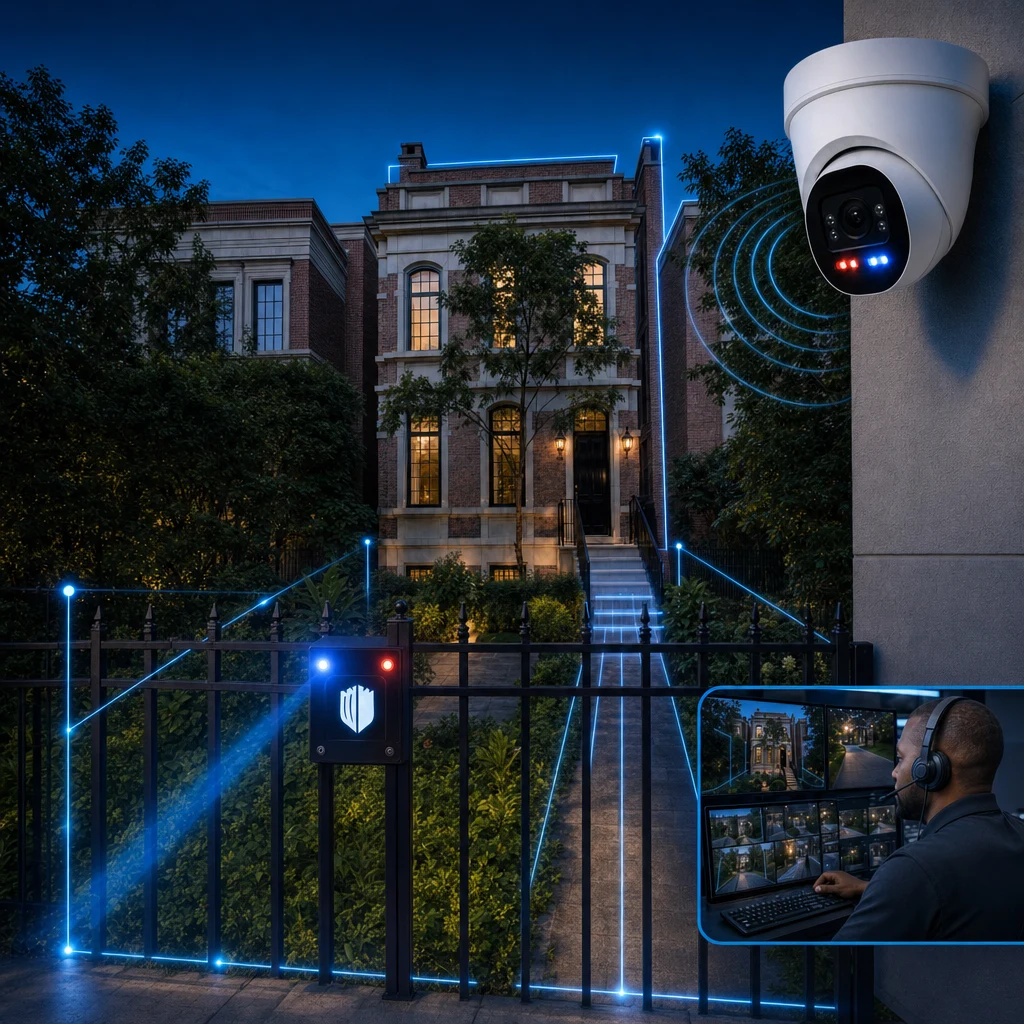
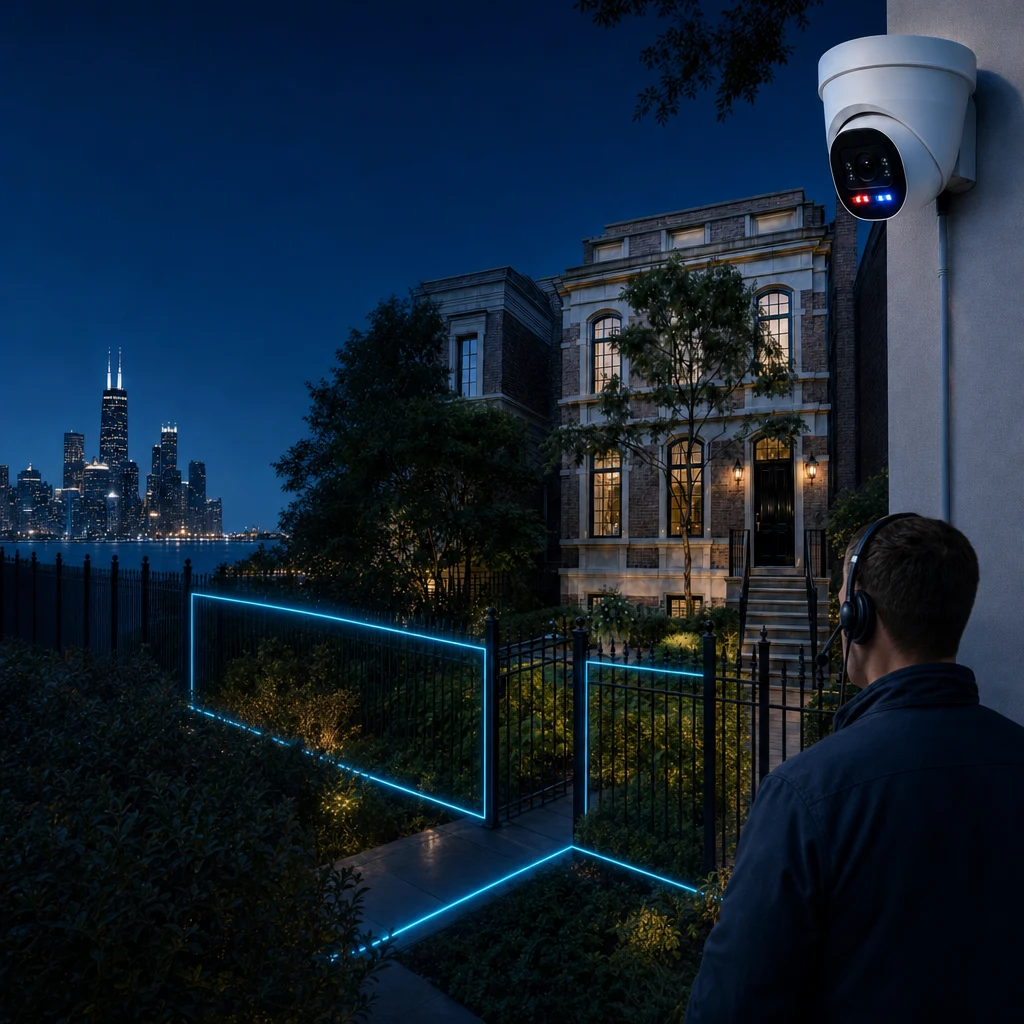
Installed into finished homes
Running cable into an occupied, finished property takes planning. Windsor surveys the building, identifies the routes cable can follow and designs the installation so that walls, finishes and landscaping are disturbed as little as practical. This is installation work done by professionals, and it is one reason Windsor does not offer a do-it-yourself version.
Want this designed around your property?
Less equipment on show
Hardwiring also tends to help appearance. When power and data run through the structure, devices can be smaller and positioned with care, and there are fewer visible cords, boxes and battery packs. The goal is a property that looks like a home.
Maintenance and support
Windsor supports the system after installation, including assistance with system health, camera lines of sight, detection lines and false alarms. Coverage and access for maintenance are considered in the design. Warranty and service-agreement terms are provided directly by Windsor.
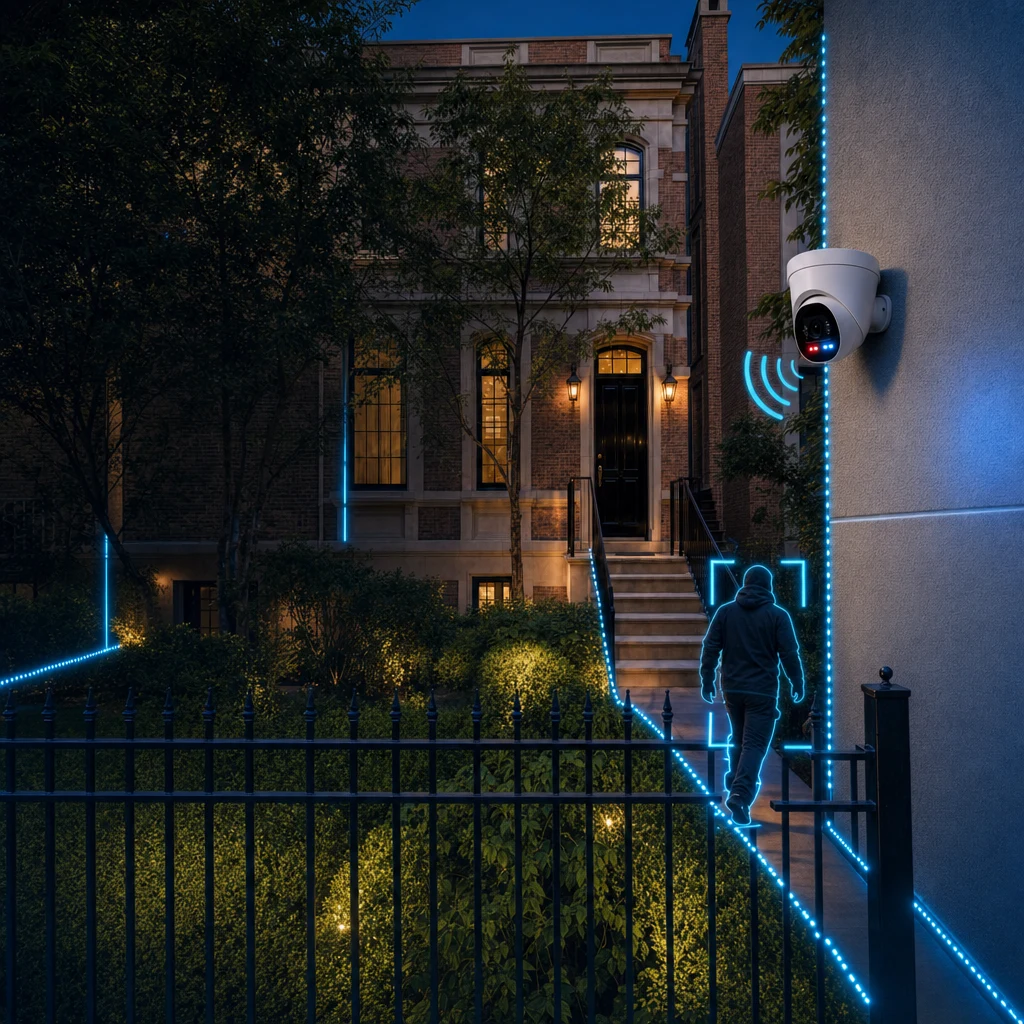
Where wireless still fits
Some elements, such as certain accessories or temporary additions, may reasonably use wireless links. The design principle is simple: critical functions should not depend on them.
The questions to ask about any wired system
When comparing wired systems, ask who designs and installs them, which components are wired, how cable is protected, how power is maintained, how the system connects to monitoring and how the team identifies problems. A qualified provider can answer each question plainly.
- Which components are hardwired, and which depend on wireless links?
- How is power maintained and how are faults noticed?
- How does the system communicate with monitoring?
- Who services the system after installation?
Planning for renovation and change
If you are renovating, bring Windsor in early. It is far easier to route cable before walls are closed. If you are not, the survey will show what is practical. Either way, the design records where infrastructure runs so that future work, such as a new gate or an extension, can be integrated without guesswork.
Honest trade-offs
Hardwiring takes more planning and more time on site than a wireless kit. For some properties and some uses, a wireless component may be a sensible choice. Windsor's position is narrower: the infrastructure the system depends on should not be a wireless signal. We think the extra effort is worth it, and we are happy to explain why.
When hardwiring is hardest, and what to do
Older homes with plaster walls, finished basements and detached outbuildings are the hardest to wire. They are also often the ones that benefit most, because wireless signals struggle through thick masonry and across long distances. If your property is like that, say so early. The survey will show what is practical, and Windsor will tell you plainly if a route is not, and will explain what the alternatives would be and what each one would mean for reliability, appearance and the work required in your home.
What a hardwired survey looks at
Before proposing a design, Windsor looks at the building: construction, finishes, existing conduit, attic and crawl spaces, exterior walls and the paths between the house and outbuildings. The survey decides which routes are practical, what needs to be protected from weather and where equipment can be serviced without disturbing the household.
It also looks at what is already there. Existing cabling or equipment may be usable, and you should not be asked to pay for work that has already been done.
Hardwired and discreet
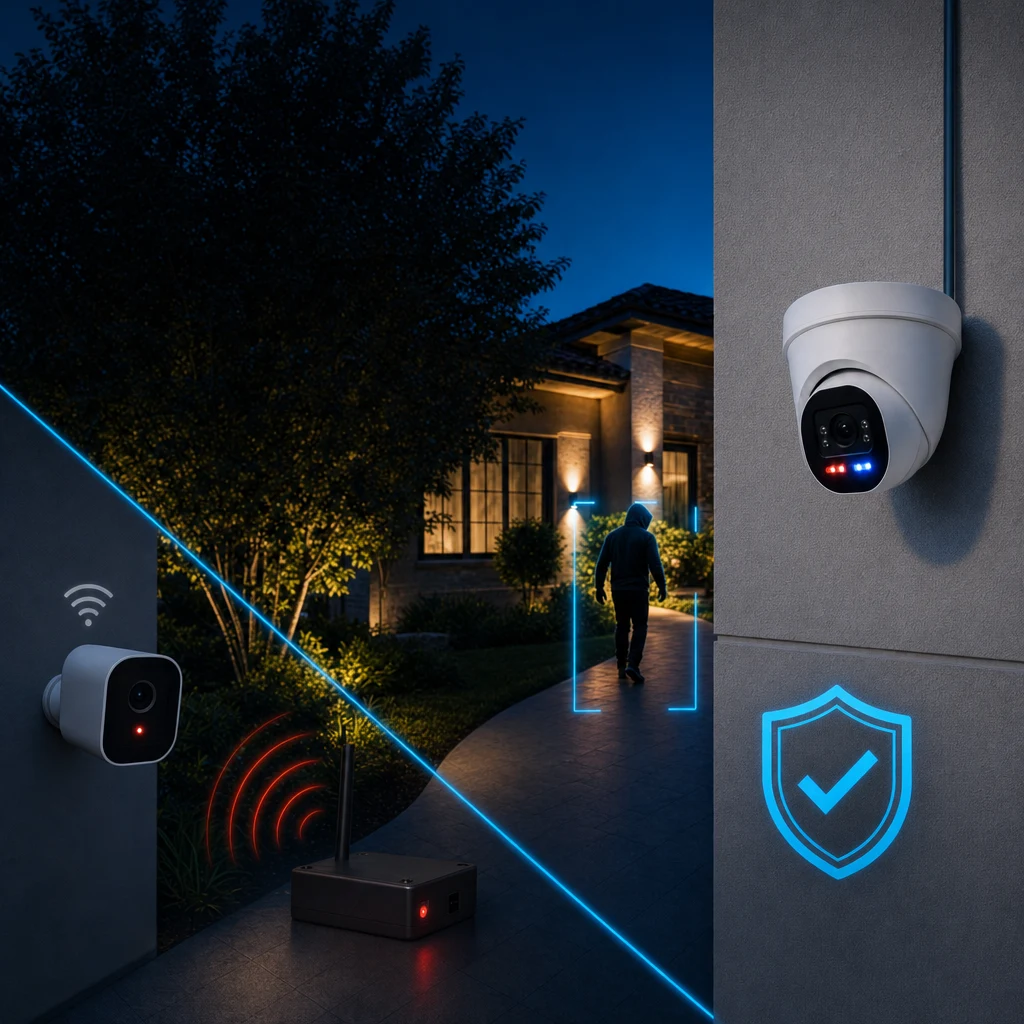
A good installation is hard to see. Cable is routed through structure and not along walls, and devices are small and sited with the architecture in mind. That is easier with hardwired power and data than with batteries and bridges, which need to be reached and replaced.
A longer comparison
For a fuller treatment of reliability, installation and maintenance trade-offs, read our guide comparing hardwired and wireless home security.
Frequently asked questions
Will hardwiring damage my walls?
Installation is planned to disturb finishes as little as practical, but the extent depends on the building. Windsor surveys the property before proposing a design.
Is every device hardwired?
No. Critical infrastructure is professionally hardwired, and the design identifies what that covers.
Can I install it myself?
Windsor systems are professionally designed and installed. A self-install product is a different category.
What happens if the internet goes down?
Resilience depends on the specific design. Ask during the consultation how connectivity is handled for your property.
Start with your property.
The consultation is free. It begins with your property, access points, routines and priorities.