
Make your security presence known.
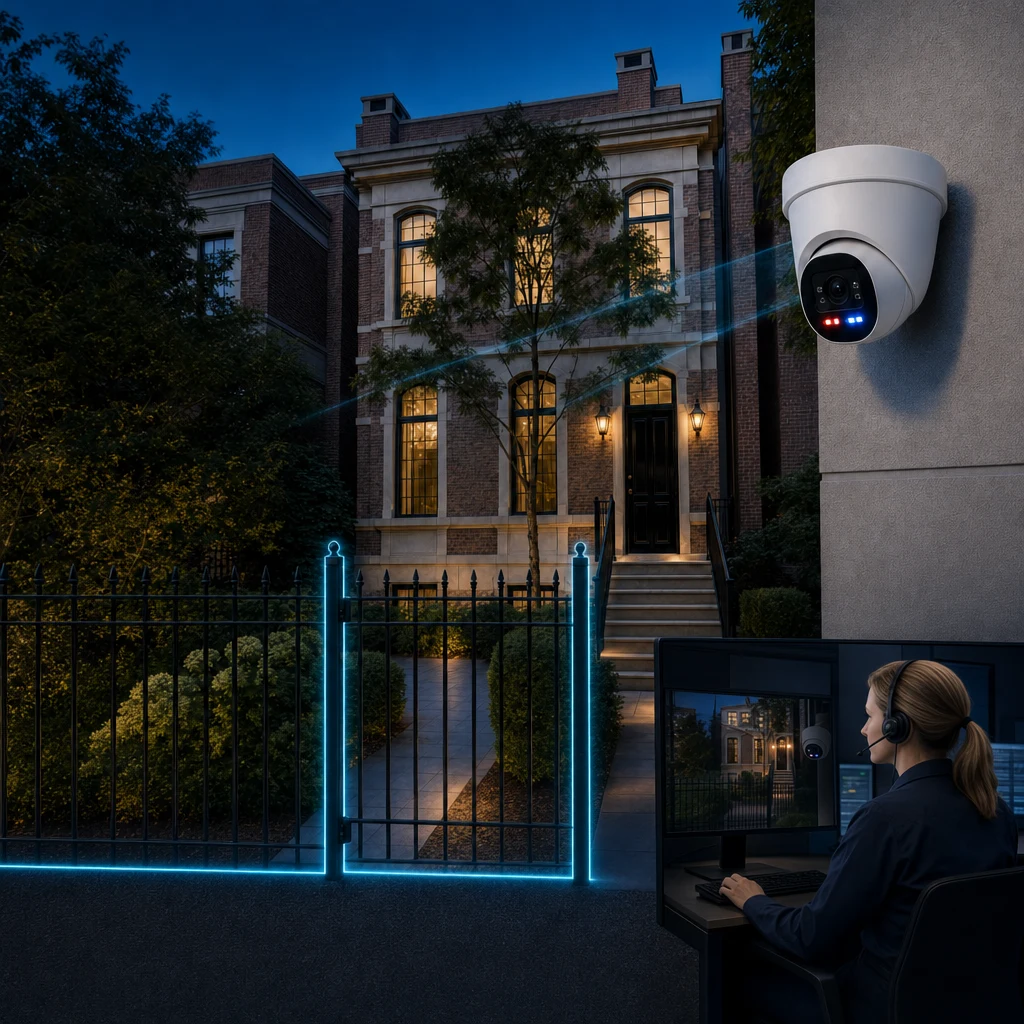
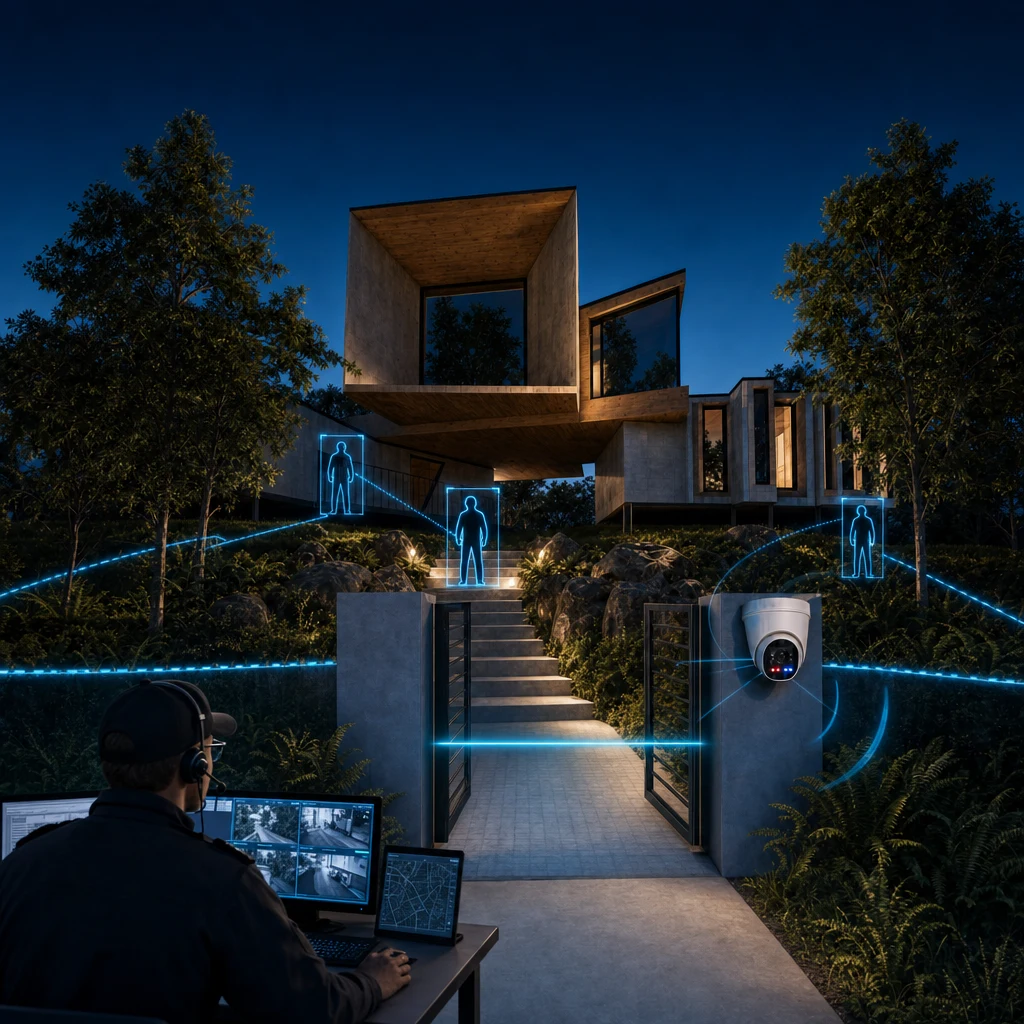
When the system is armed, people-focused detection can trigger configured lights and audio at protected approaches. Deterrence is designed to signal an immediate security response before someone reaches the home, without implying police are already there.
Why deterrence should be visible
A passive camera mostly helps after the fact. A person who sees one may or may not care. Active deterrence is different: the system responds to the person in real time, so they know they have been seen and that someone is paying attention.
The goal is to encourage the person to leave while they are still outside. The system does not establish whether a person is a threat.
Lights and sound
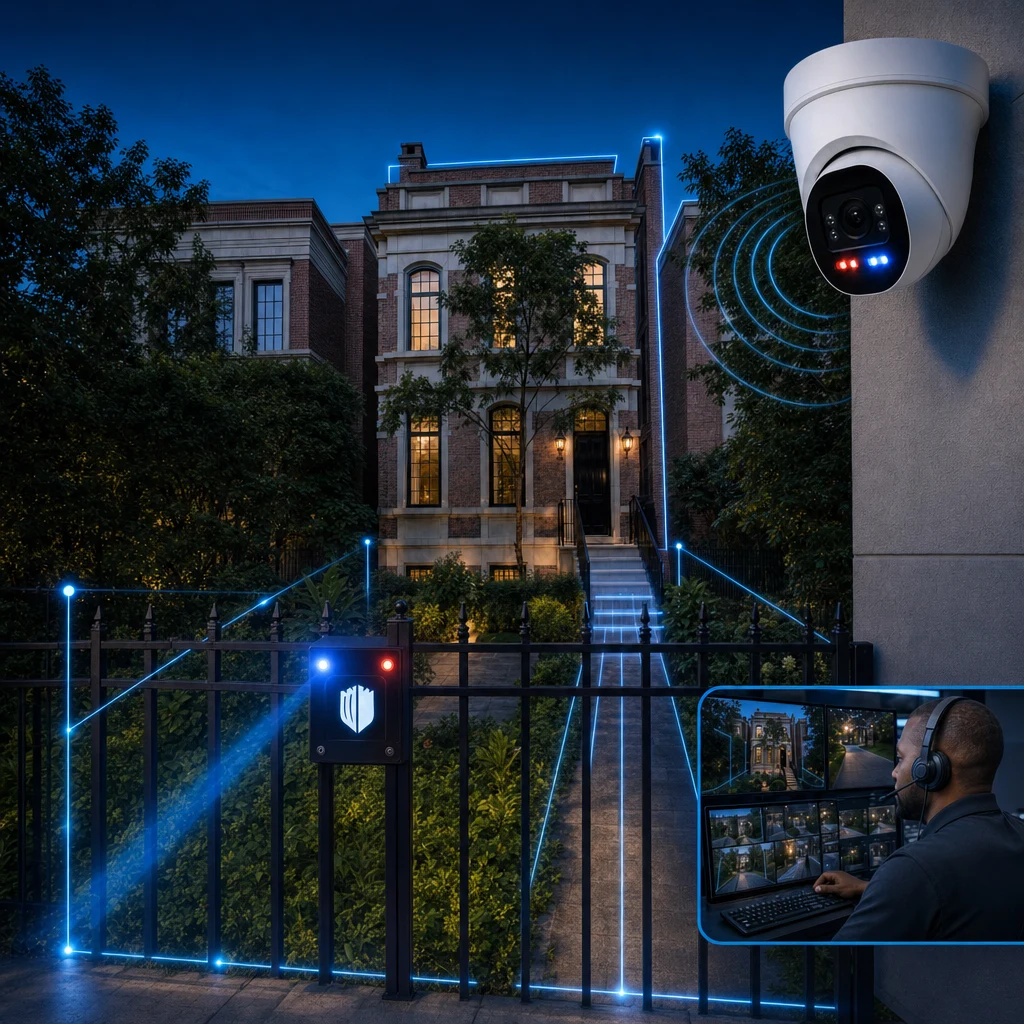
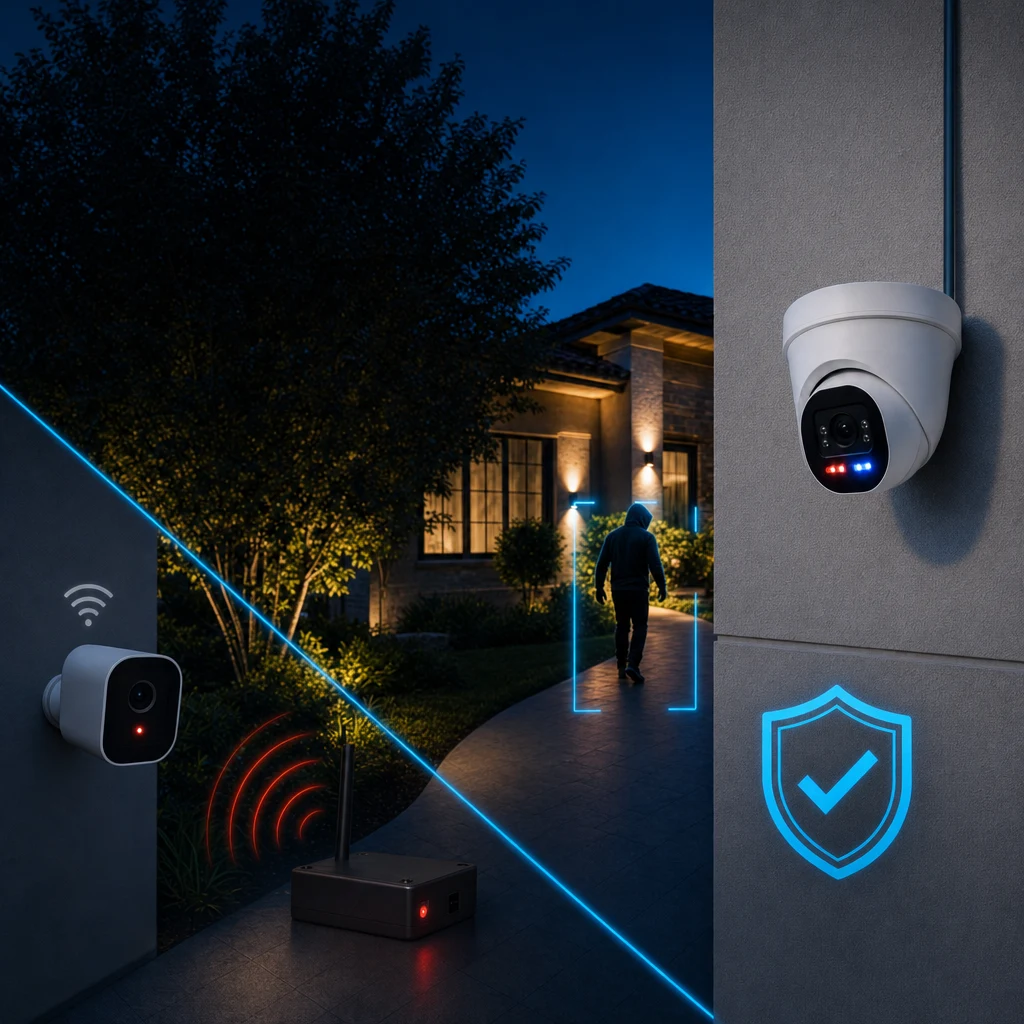
When an armed system detects a person crossing a configured line, it can activate configured lights and audio. The specific equipment and settings are established in the property design. Those signals do not mean police are on site or that dispatch is automatic.
Both can be tuned to the property. A courtyard beside a neighbour's bedroom window calls for a different approach than a rural drive, and Windsor discusses that with you rather than applying defaults.
A trained voice, not a recording
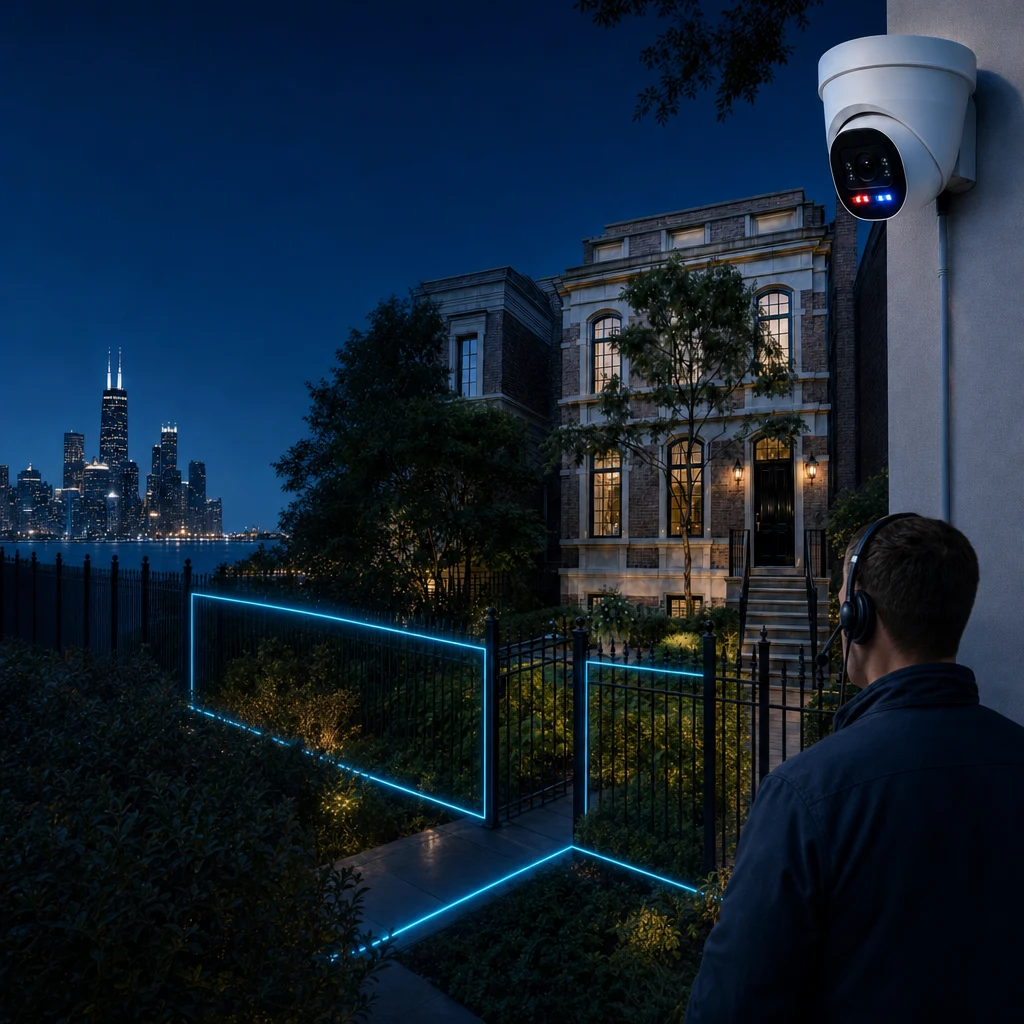
If someone remains on site, a monitoring specialist may speak through on-site audio. The specialist can describe visible clothing or actions, state that the person is on private property and direct them to leave. They should say police have been dispatched only if that has actually happened.
- Tell the person they are on private property
- Describe what the camera can see
- Direct the person to leave
- Consider further action under the service process
Want this designed around your property?
When deterrence is not enough
Some people will not leave. Specialists assess visible activity and may notify you, contact listed emergency contacts or dispatch police when appropriate under the service process. Neither an event nor a talk-down automatically requires dispatch, and an outside agency determines its own response.
Tuning for neighbours and routines
Detection-line placement and app-based arming and disarming should fit the way you use the property. Discuss staff and visitor access needs with Windsor. A specialist does not recognize your gardener, dog walker or guests; a person crossing a configured line while armed may still generate an event.
Where it fits in the system
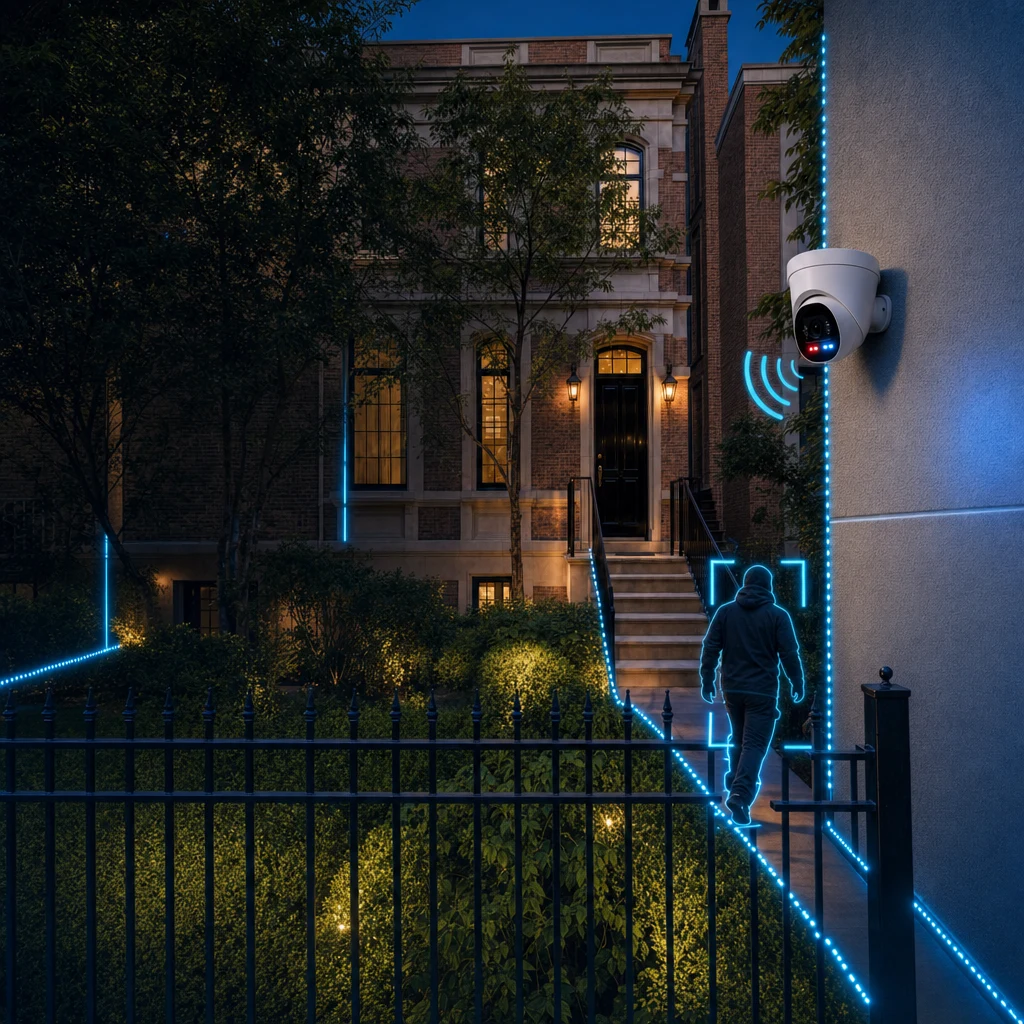
The four steps are set the detection lines, detect a person crossing a configured line while armed, deter, and respond. Professional review is part of the response. The How It Works page follows an example through that sequence.
Why live voice works differently
When appropriate, a specialist can address someone through on-site audio and refer to visible clothing or actions. This can make the security response apparent without implying police are on site. The specialist should state that police have been dispatched only if they actually have been.
The tone is professional and calm. The aim is to tell a person they are on private property and ask them to leave, not to provoke.
Design choices you will be asked about
Deterrence is configurable, so the consultation includes questions such as these.
- Should lights come on at all hours or only after dark?
- Is sound appropriate at the property, given neighbours and local rules?
- Which zones should trigger deterrence and which should only alert professionals?
- Who should be called if a person does not leave?
Local rules and courtesy
Some communities have rules about noise and lighting. Windsor asks about them so the design respects them. If a homeowners association or local ordinance applies to your property, say so, and we will plan around it.
Testing and adjusting after installation
Deterrence settings, detection lines and camera views are reviewed with the property and neighbors in mind. Windsor can assist with false alarms and configuration concerns after installation. An expected visitor may still generate an event while the system is armed; the app gives the homeowner arming and disarming control.
Deterrence and the rest of the system
Active deterrence depends on perimeter detection, which decides when to act, and on trained professionals, who decide what to say. The hardwired infrastructure keeps both working. Read about those layers if you want to see how they fit together.
A deterrent without detection is a floodlight on a timer. A detection without a deterrent is a notification. Combined and reviewed by people, they are a response.
Deterrence works as part of a plan
When a person crosses a configured line while armed, configured lights and audio can signal a security response. Specialists assess footage sent to them and follow the service process. Those signals do not mean police are on site or that a dispatch has automatically occurred.
Who is it for
Homeowners who would rather a person were challenged outside than found at a door. If you are uncomfortable with audible systems for reasons of neighbourhood or taste, raise that early. It is a design choice, not a requirement.
Frequently asked questions
Can deterrence be switched off for certain times?
You control arming and disarming through the app. Discuss detection-line placement and access needs with Windsor; do not assume that an expected visitor will be recognized or automatically excluded.
Is the voice automated?
Windsor describes it as a trained professional who can speak to the person when appropriate, rather than an automated message.
Will lights and sound disturb my neighbours?
They can be designed with neighbours in mind. Placement and volume are part of the property design.
Does deterrence guarantee a person leaves?
No. Specialists assess the visible event and may take further action under the service process, but a particular outcome is not guaranteed.
Start with your property.
The consultation is free. It begins with your property, access points, routines and priorities.