
Live Video Monitoring vs. Self-Monitoring: Who Responds to an Alert?
How trained professionals and app alerts differ when something happens at a property you may not be near.
Introduction
Many homeowners already have cameras. The real question is what happens when those cameras detect something important.
In a self-monitored setup, the system usually sends an alert to the homeowner. Then the homeowner has to notice it, assess it, and decide what to do.
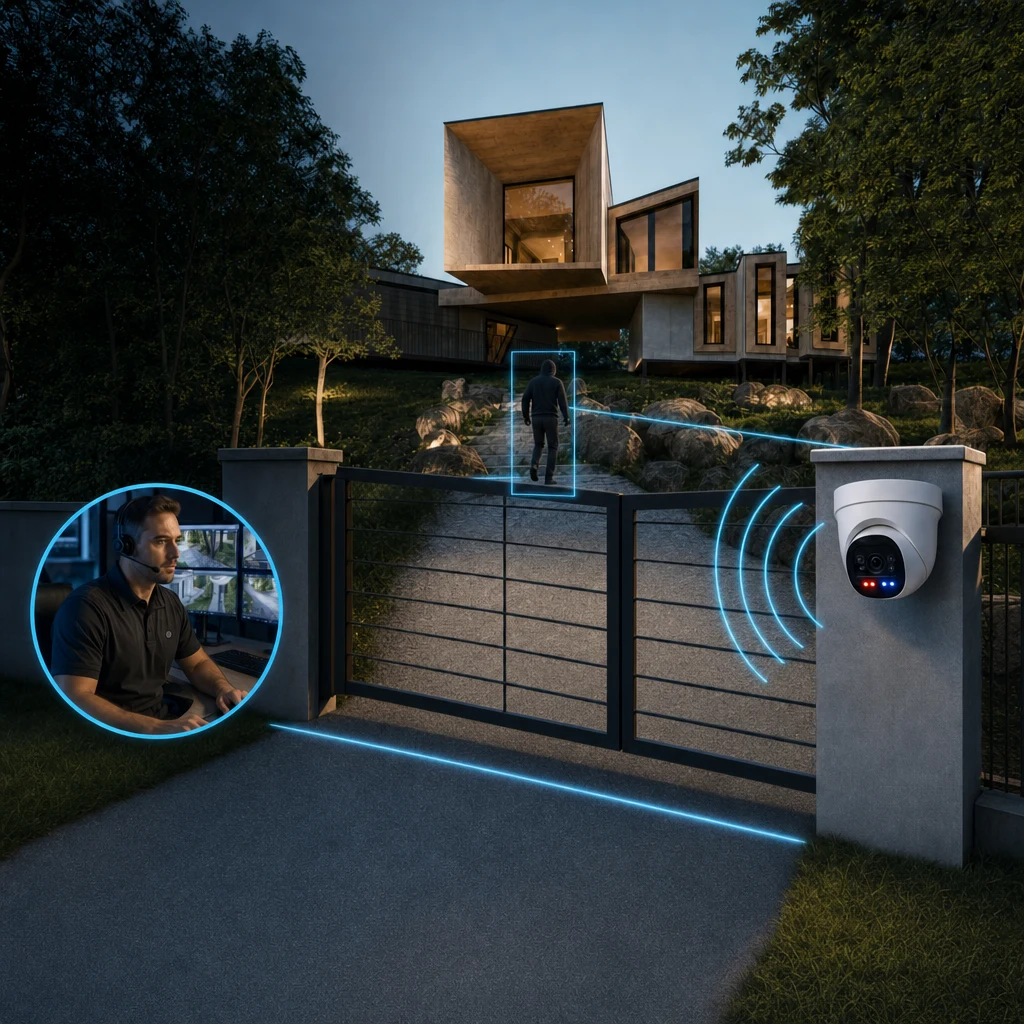
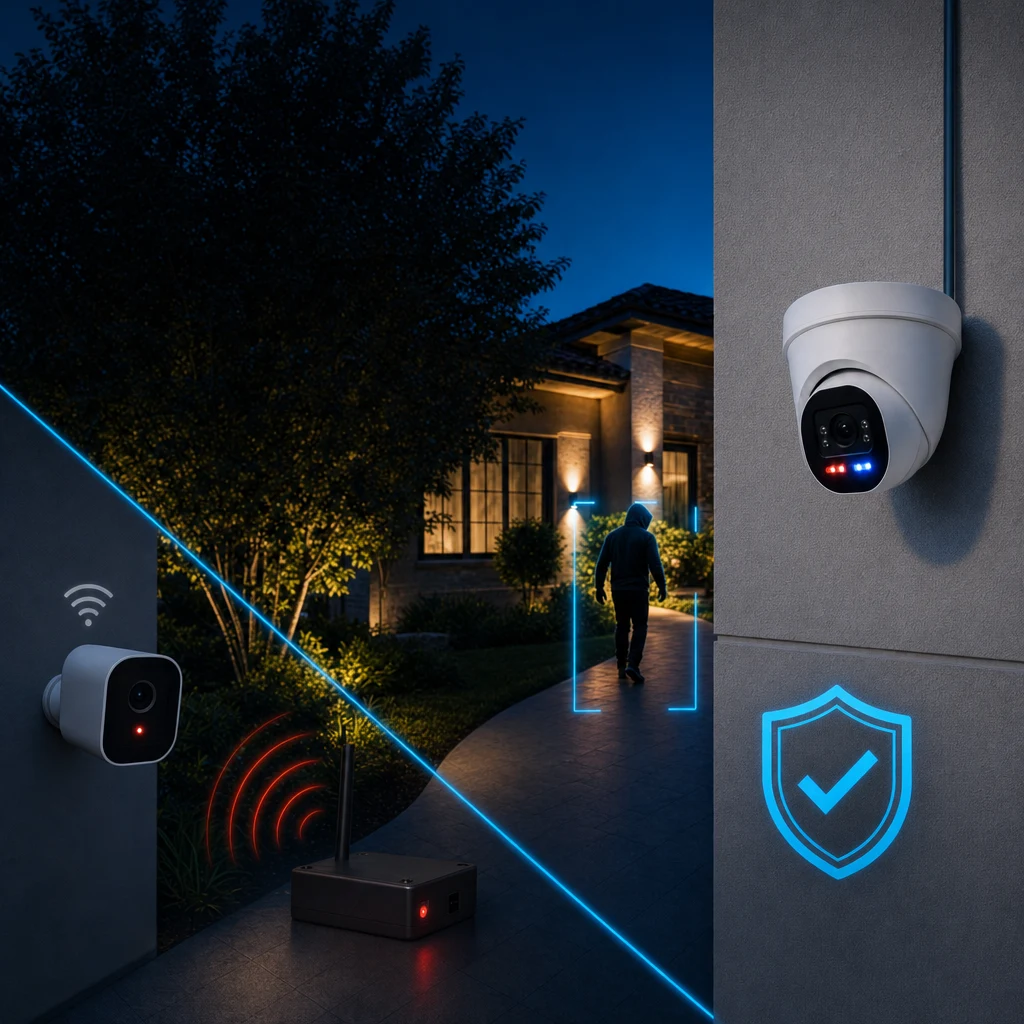
With live video monitoring, a person crossing a configured line while the system is armed may create an event for specialist review. Monitoring follows a consistent service process, with relevant contact and notification details on file.
With self-monitoring, you need to see the notification and decide what to do. Windsor homeowners can still view cameras and control arming and disarming through the app, but event review and response do not have to fall on them.
For homeowners evaluating a security camera monitoring service, the central issue is not convenience alone. It is whether the system still works effectively when you are asleep, busy, traveling, in a meeting, on a plane, or simply not looking at your phone.
What self-monitoring means
Self-monitoring usually means the homeowner receives app alerts, recorded clips, or live access to cameras and is responsible for deciding whether an event matters.
For some people, that model is acceptable. It offers visibility and control, and it may feel straightforward at first.
But it also assumes several things:
That is a lot to ask from a homeowner in the middle of daily life.
- You see the alert quickly
- You can tell what is happening from the footage
- You are available to respond
- You know what action to take
- You are comfortable carrying that responsibility
What live monitoring means
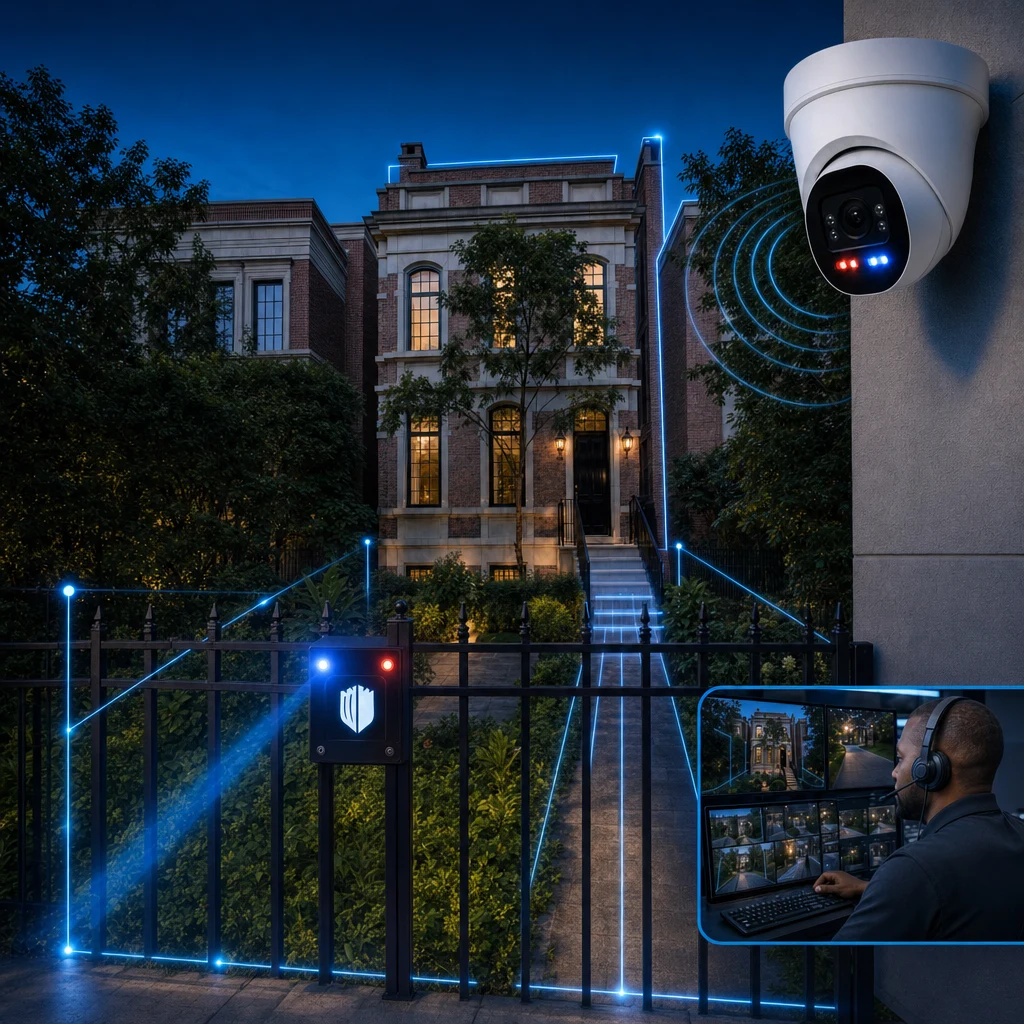
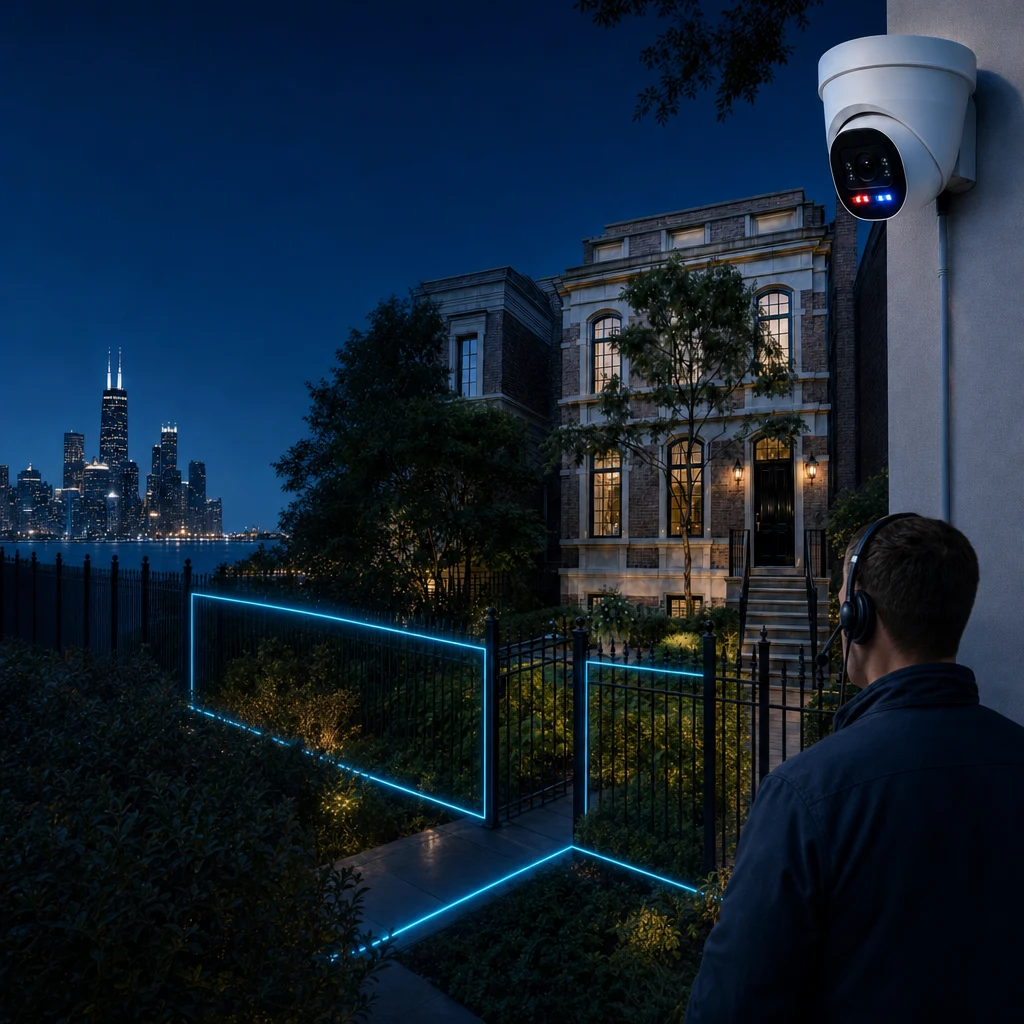
Live video monitoring services add a human response layer to the system.
When an event is sent for review, specialists see camera footage and assess what is visible. They do not know the homeowner, recognize familiar visitors or know who is expected. Under the service process they may use on-site audio, notify the homeowner, contact listed emergency contacts or dispatch police when appropriate.
A delivery person may cross a configured line while the system is armed. If footage shows them deliver a package and leave, that does not automatically lead to police or emergency-contact calls. The assessment uses visible actions, not personal familiarity.
That does not mean every event receives the same treatment. It means the system is configured so a relevant event can receive prompt professional attention.
Want this designed around your property?
The practical difference
The most important difference is not technical. It is operational.
In self-monitoring.
The homeowner becomes the decision-maker in real time.
In live monitoring.
The homeowner has support from trained professionals who review and respond according to a predefined plan.
That can matter greatly during the moments when homeowners are least available to act.
Why self-monitoring often sounds better than it feels
Self-monitoring appeals to many homeowners because it promises direct access and control. In practice, it can become burdensome.
Alerts can arrive at inconvenient times.
You may miss a notification while sleeping, traveling or working. A self-monitored system depends on you seeing the alert in time and being able to act.
Not every clip is easy to interpret.
A short camera clip may not make it obvious whether someone is a delivery person, a guest, a contractor, or a potential intruder. Context matters, and making that judgment under pressure is not always easy.
Alert fatigue is real.
If a system generates too many low-value alerts, homeowners may begin to ignore them. That weakens the usefulness of the entire setup.
This is one reason AI filtering and professional review work well together. To understand the detection side, see AI Perimeter Security Explained.
Why live monitoring changes the experience
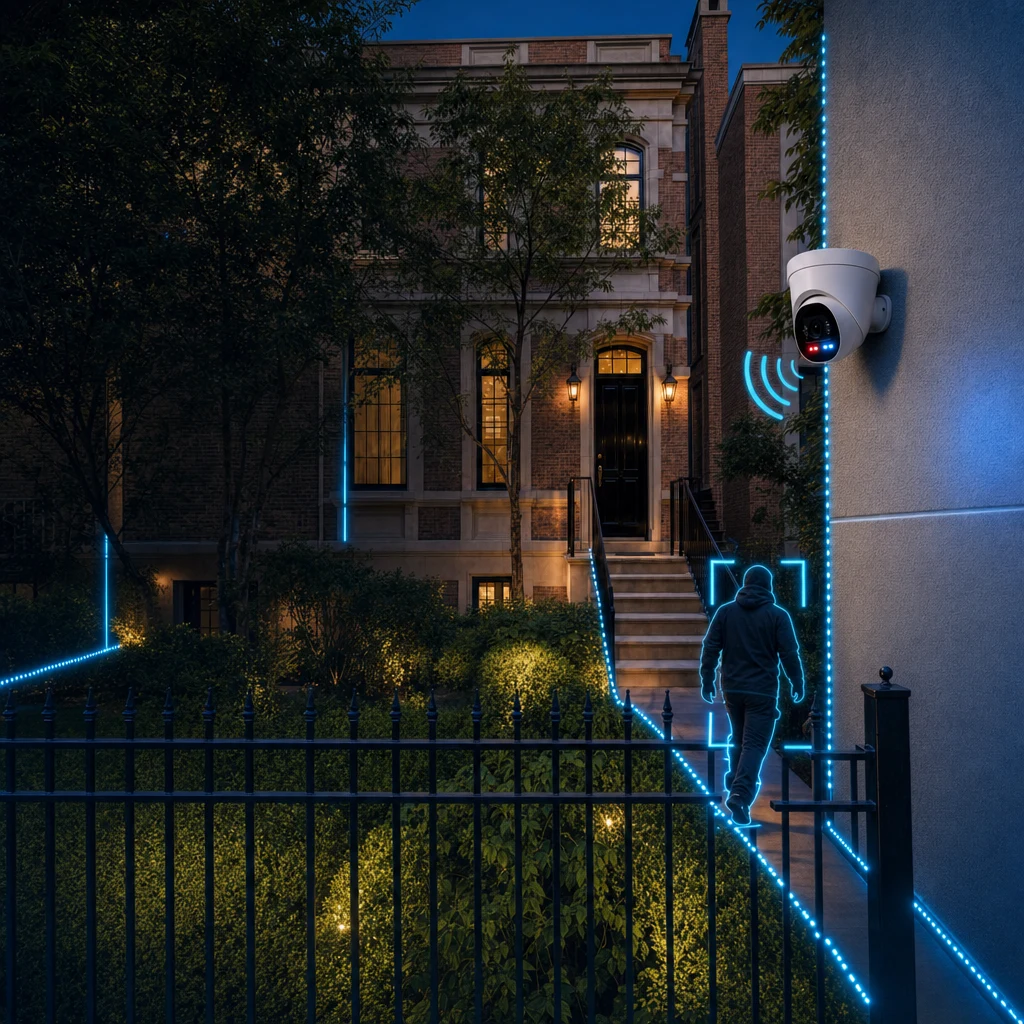
A remote video monitoring model changes the homeowner’s role. Instead of being the first and only responder, the homeowner becomes part of a planned process.
That can improve the experience in several ways.
Relevant events can be verified.
Trained professionals review what the system identifies as relevant activity. This helps move the process beyond a generic push notification.
The system can support deterrence.
In some systems, a trained professional can speak directly to the person on the property and instruct them to leave. That direct communication can be a meaningful deterrence step.
Escalation follows a plan.
A cautious, largely standard escalation process guides review and appropriate action, with relevant homeowner and emergency-contact details on file. An event does not automatically lead to dispatch, and specialists should state that police have been dispatched only when they actually have been.
What this means for your home
If you are realistic about how often you want to watch security notifications, the choice becomes clearer.
Self-monitoring may be enough for checking the property, seeing deliveries or reviewing clips after an event.
Live video monitoring is often the better fit if your goal is a managed response built around earlier detection and preventive action.
This can be especially relevant for:
- Frequent travelers
- Second-home owners
- Families who do not want to monitor an app constantly
- Homes with multiple access points
- Households that want a calmer, more structured security process
Live monitoring works best when paired with good detection
Monitoring alone does not solve everything. The quality of the system’s detection still matters.
A smarter workflow often looks like this:
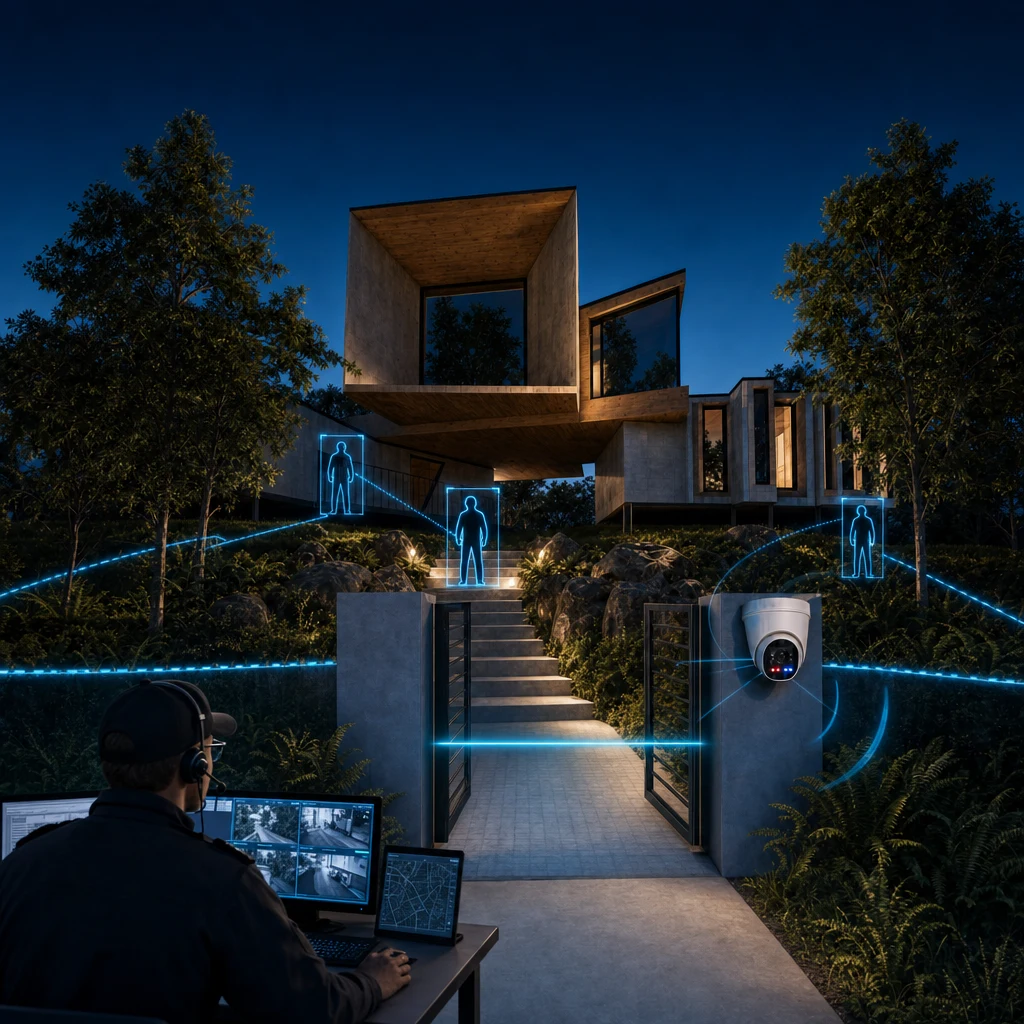
This is why Windsor’s model brings together AI perimeter security, live video monitoring, and professionally hardwired infrastructure.
- The property’s approaches are mapped
- AI helps distinguish people from less relevant motion
- A relevant event is reviewed by trained professionals
- While armed, configured deterrence and event review follow the service process
Cost is not the only comparison
Homeowners sometimes evaluate monitoring only as a monthly line item. That misses the larger question.
A better comparison is responsibility.
With self-monitoring, the homeowner carries more of it:
With a security camera monitoring service, more of that responsibility shifts into a designed, professional process.
For homeowners who do not want one more app demanding attention, that is the value: professional event review without making them responsible for watching every notification.
- Watching alerts
- Interpreting clips
- Deciding whether action is needed
- Taking that action
The limits of live monitoring
Responsible companies should be clear here.
Live monitoring does not guarantee dispatch, police response, response time or a successful deterrence outcome. Actions depend on visible activity, the service process and applicable local procedures.
But those limits do not reduce the value of the model. They simply describe it accurately.
Specialists review the footage sent to them under the service process, even when the homeowner cannot check an alert. They are not continuously watching every camera or recognizing the people who visit.
Windsor’s approach to monitored security
Windsor Defense is built around the idea that cameras should do more than record. Its systems are designed to detect a person at the perimeter, support deterrence, and connect the event to trained professionals before entry occurs.
That approach is particularly different from self-monitoring because the homeowner does not need to be the first line of review.
If you are comparing options, it can also help to read Traditional Alarms vs. Preventive Security for the bigger strategic context.
Start with your property.
The consultation is free. It begins with your property, access points, routines and priorities.