
AI Perimeter Security: How Earlier Detection Helps Protect Your Home
What it means to detect a person at the edge of a property rather than at the door, and what the technology can and cannot do.
Introduction
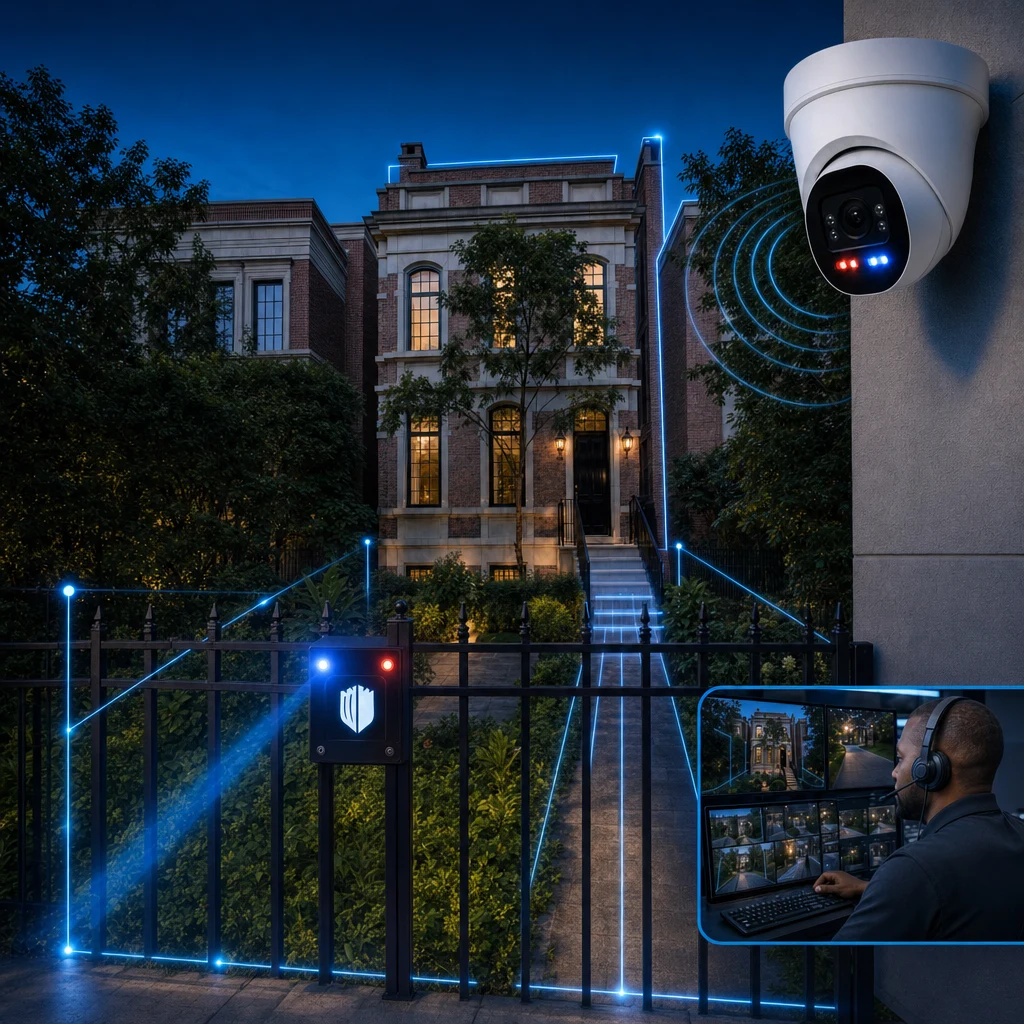
Most home security systems begin working at the point of entry. A door contact trips. A glass-break sensor activates. A camera records video and sends an alert after movement has already happened.
AI perimeter security is different. It is designed to recognize relevant activity at the property’s approaches and access points before someone reaches the home itself.
For homeowners, the practical meaning is simple: the system is designed to begin its response sooner. Instead of waiting for a door or window event, a properly designed perimeter security system can identify a person crossing a configured boundary, support deterrence, and connect the event to trained monitoring professionals before an intrusion becomes an entry event.
That earlier start is the real advantage. The AI is important, but it is not the goal by itself. Prevention is the goal. The technology supports that outcome.
If you are comparing options, it helps to think of AI perimeter security not as “more cameras,” but as a different security approach altogether.
What AI perimeter security means
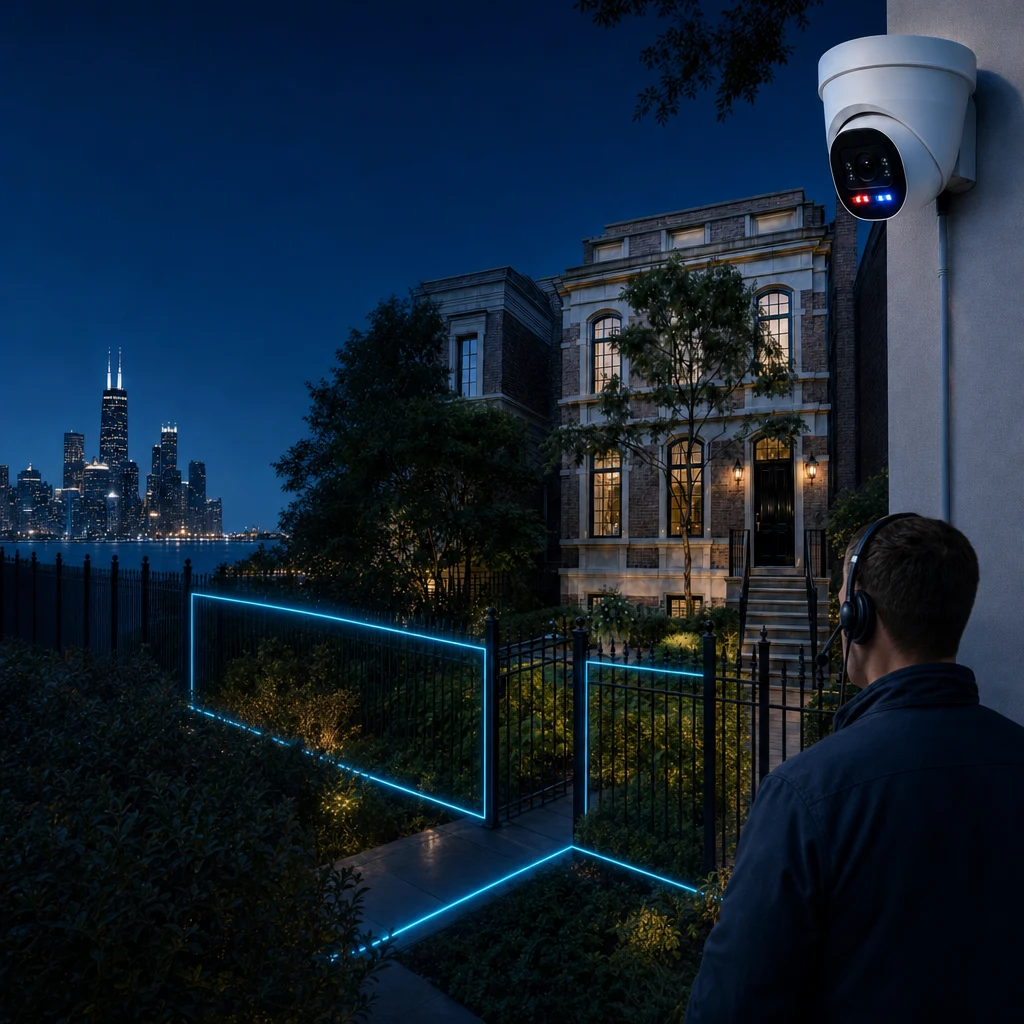
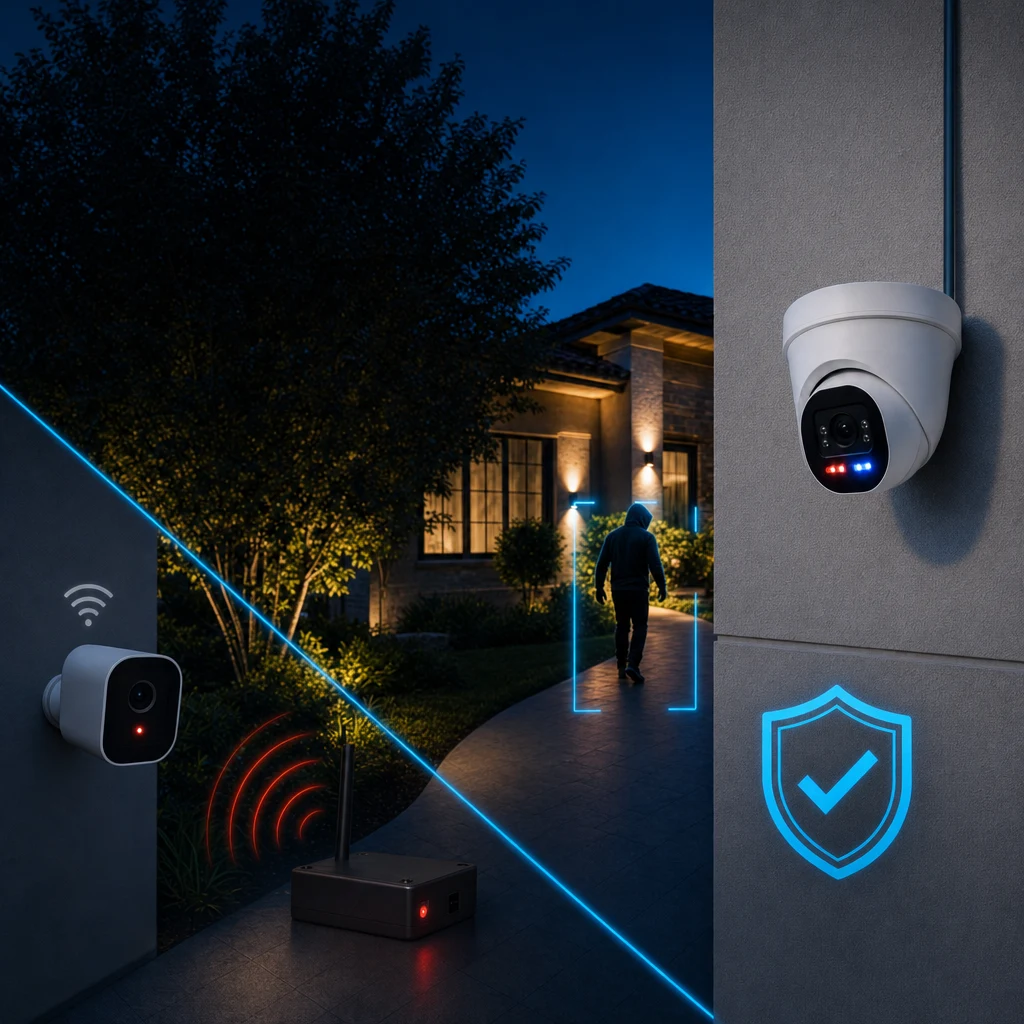
AI perimeter security uses cameras, analytics, and configured detection zones to watch the outer approaches of a property rather than focusing only on what happens after someone reaches a door or window.
In plain language, it creates an invisible boundary at the points that matter most. Those may include:
When the system is armed through the app, a person crossing a configured line may create an event for review. Lines may sit near a gate, door, sidewalk, front yard, side passage or porch; they do not have to follow the property boundary. The system detects people, not intentions or threats.
AI-assisted analysis helps distinguish people from pets, passing vehicles, shifting light and weather. It filters the activity sent for professional review, although classification can still be wrong.
- Front walks
- Driveways
- Gates
- Side yards
- Rear approaches
- Patio access routes
- Garage approaches
- Other property-specific entry paths
How AI perimeter security works
A residential AI perimeter usually follows a sequence like this:
1. The property is mapped.
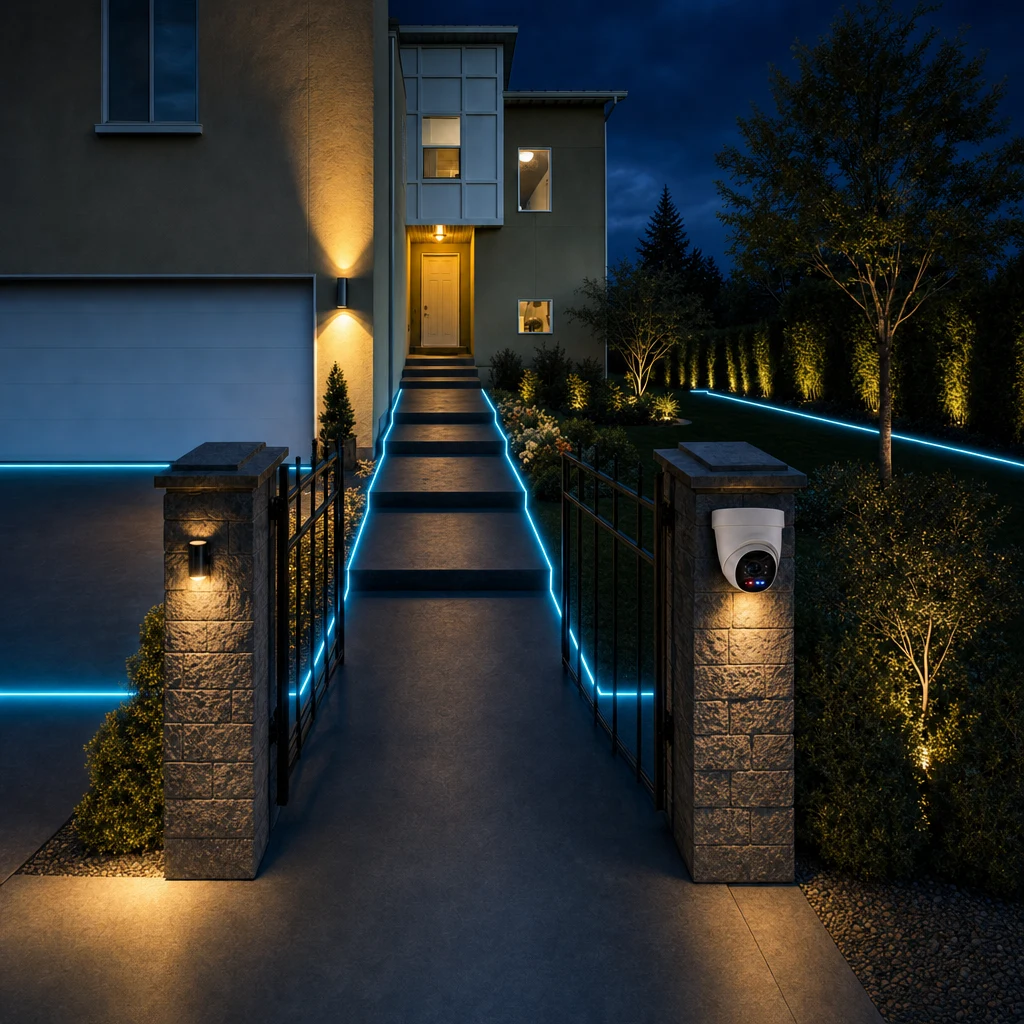
A professional design starts by studying the real layout of the home. That includes visible approaches, choke points, likely access routes, landscaping, fencing, lighting conditions, and areas where someone would need to pass to get closer to the house.
Detection zones need to match the property's entrances, paths and normal activity.
2. Detection zones are created.
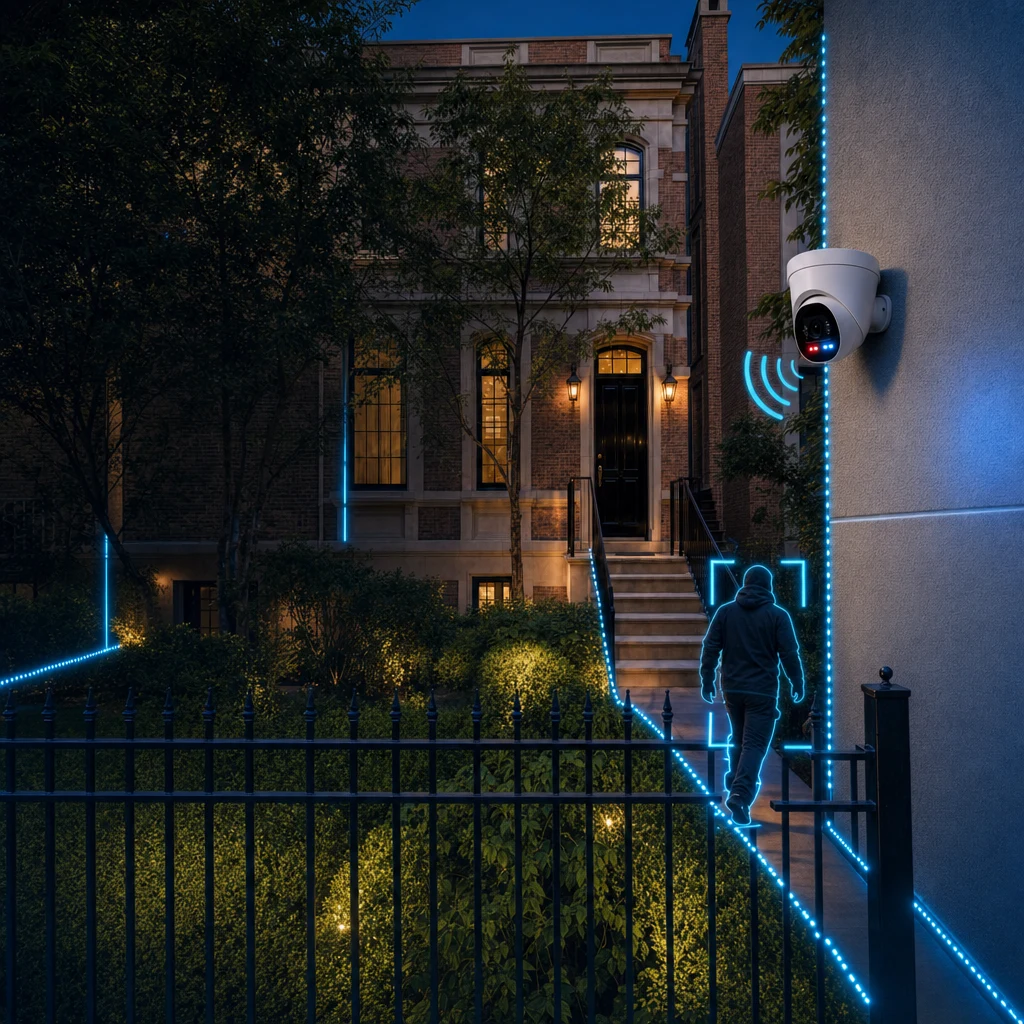
Once the key approaches are identified, the system uses cameras and analytics to establish virtual boundaries or zones. These are placed where a person’s presence should matter, not where ordinary motion happens all day.
For example, a detection line may be placed across a side passage rather than across the entire frame of a camera view.
3. AI classifies the event.
When movement occurs, the AI layer analyzes whether the motion appears to be a person rather than a vehicle, animal, or weather event. This is one of the defining differences between basic motion alerts and modern AI home security.
No detection technology is perfect, and responsible security companies should not suggest otherwise. But a person-classification layer can make the response more useful than a simple “motion detected” notice.
4. The system can trigger deterrence.
If the event meets the configured criteria, the system can activate deterrence measures at the perimeter. Depending on the design, that may include lights, audio warnings, or both.
The important point is timing. The alarm does not need to wait for a forced entry signal before beginning a response sequence.
5. Trained professionals verify and respond.
When an event is sent for review, specialists assess the visible footage under a cautious, largely standard escalation process. They do not know the household, recognize familiar visitors or know who is expected. Relevant contact and notification details are on file.
Appropriate action may include on-site audio, notifying the homeowner, contacting listed emergency contacts or dispatching police under the service process. An event does not automatically require emergency escalation. Someone visibly delivering a package and leaving is not automatically an emergency.
Want this designed around your property?
How it differs from traditional alarms and standard cameras
AI perimeter security is easiest to understand when you compare it to more familiar systems.
Traditional alarm systems.
Traditional alarms are usually designed to react to an entry-related event. That may mean a door opening, glass breaking, or an interior motion detector activating.
That can be valuable, but the event has already progressed closer to the home. In many cases, the system has started late in the sequence.
Recording cameras.
Standard cameras may capture useful footage, but recording by itself does not change the event. If the homeowner notices an alert after the fact, the camera may document what happened without affecting what happens next.
AI perimeter security.
An AI perimeter is designed to detect a person sooner, support active deterrence, and bring trained professionals into the event before entry occurs.
That is why Windsor’s approach is best understood as preventive rather than purely reactive.
For a broader comparison, see Traditional Alarms vs. Preventive Security.
What this means for your home
For homeowners, the technical explanation only matters if it changes the lived experience of security.
A well-designed perimeter security system can mean:
This is especially relevant for larger homes, corner lots, gated properties, homes with rear access routes, or residences where travel is common and self-monitoring is unrealistic.
- Earlier awareness of a person approaching key access points
- Fewer irrelevant alerts than simple motion-based systems
- A response that does not depend on you seeing a phone notification immediately
- Deterrence that can begin before someone reaches the home itself
- A design based on your property rather than a one-size-fits-all kit
Why professional design matters
Many homeowners first encounter AI security through consumer devices. Some of those products are useful, but there is a meaningful difference between adding smart cameras and designing a complete perimeter strategy.
A true residential perimeter intrusion detection system depends on decisions such as:
These are not packaging decisions. They are security design decisions.
That is why Windsor positions its service as a strategy built around the property, not a kit.
To understand how this fits into a full system, visit Residential Security Systems or How Windsor Defense Works.
- Where to place cameras for early, useful detection
- Which approaches should trigger review
- How to reduce irrelevant motion events
- What deterrence actions should be configured
- How monitoring professionals should respond
- How the homeowner wants escalations handled
Why hardwired infrastructure often supports perimeter security best
Perimeter detection only helps if the system infrastructure is dependable. That is one reason Windsor emphasizes professionally installed hardwired systems for critical security functions.
Wireless security can be convenient, but a wireless signal can also become a point of failure. In residential security, that matters because perimeter detection is most useful when it works consistently across the areas that matter most.
A hardwired home security system can offer advantages in power delivery, connectivity stability, and long-term system design. That does not mean every wireless device is ineffective. It means the underlying infrastructure choice has real implications for reliability.
Learn more in Hardwired vs. Wireless Home Security and Hardwired Home Security Systems.
AI plus trained professionals is more useful than AI alone
There is a temptation in security marketing to describe AI as if it replaces judgment. For most homeowners, that is not the most useful way to think about it.
AI can help filter events. People still matter in the response.
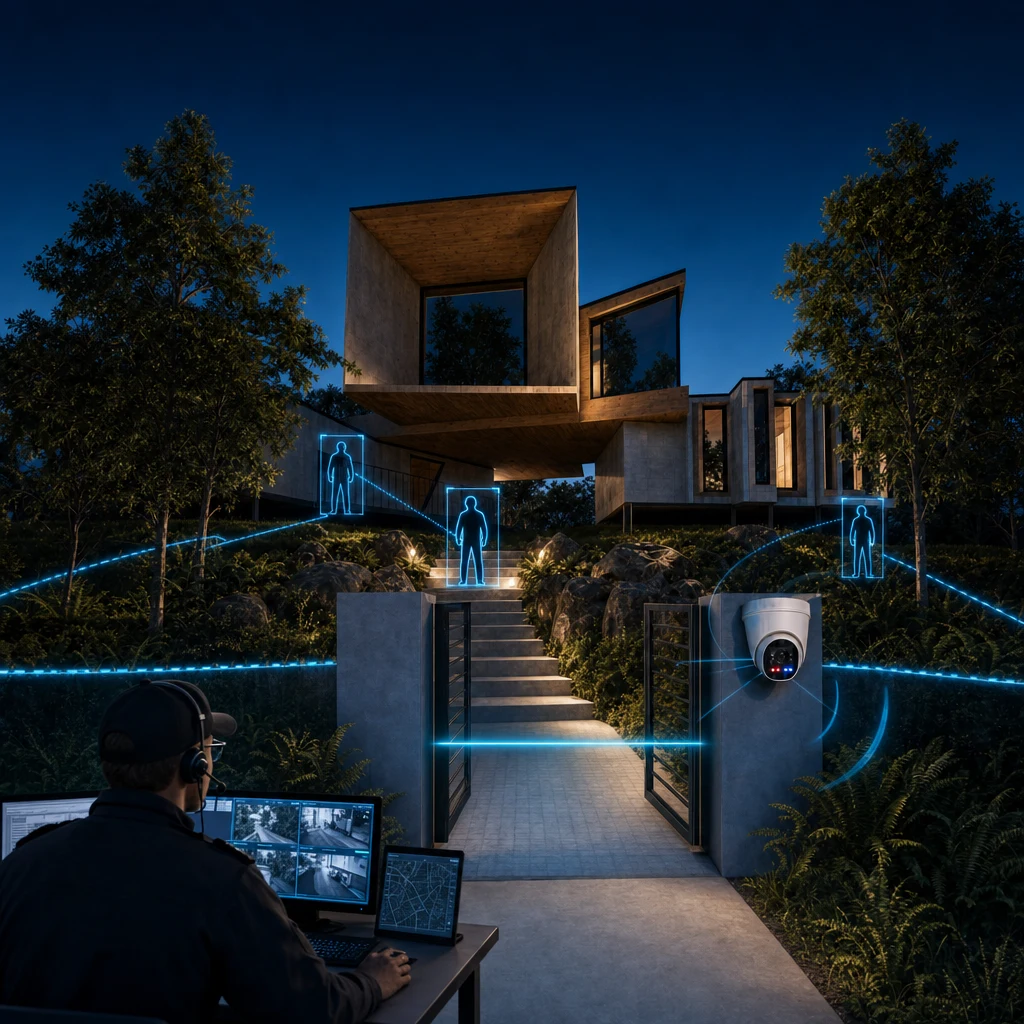
Specialists review the camera footage sent to them and assess visible conduct under the service process. They cannot establish someone's identity or whether a visit was expected from personal familiarity. They may use on-site audio to direct someone to leave, but should say police have been dispatched only when that is true.
In other words, AI helps decide what deserves attention. Trained professionals help decide what to do next.
That is one reason many homeowners comparing advanced systems also compare Live Monitoring vs. Self-Monitoring.
Who should consider AI perimeter security
AI perimeter security may be worth exploring if you want more than video documentation after the fact.
It can be a strong fit for:
It may be less about adding gadgets and more about changing when the security response begins.
- Primary residences with multiple access points
- Second homes that are unoccupied part of the time
- Homes where side and rear approaches matter as much as the front entry
- Households that travel often
- Homeowners who do not want to self-monitor camera feeds
- Properties where clean professional installation matters
The Windsor approach
Windsor Defense designs professionally hardwired, AI-driven residential security systems that detect a person at the perimeter, activate deterrence, and connect the event to trained professionals before entry occurs.
That approach is built around several principles:
If you are evaluating whether this type of system is appropriate for your home, the next step is usually a property-specific conversation, not an online checkout flow.
- Support early detection and deterrence before entry
- Use AI to distinguish people from pets, vehicles, and weather
- Create a managed response, not just a push notification
- Professionally hardwire critical infrastructure
- Design the system around the real property and household
Start with your property.
The consultation is free. It begins with your property, access points, routines and priorities.